From Earth to the Cosmos: the University Unveils New Pathways of Science
The renewed exhibition layouts of the Specola Museum and the Museum of Palazzo Poggi– now directly connected to the University Library – together with a new multimedia room on the history of the University of Bologna, return a centuries-old narrative to the community and strengthen the bond between the University and the local area

From the reopening of the Specola Museum to the refurbishment of the Museum of Palazzo Poggi, now connected to the Bologna University Library, and the inauguration of the new Sala Alma Mater: the University is giving back to the city of Bologna its historic spaces in a renewed form, integrating an extraordinary legacy from the past with cutting-edge multimedia solutions. A tangible commitment to making knowledge accessible to an ever-wider audience.
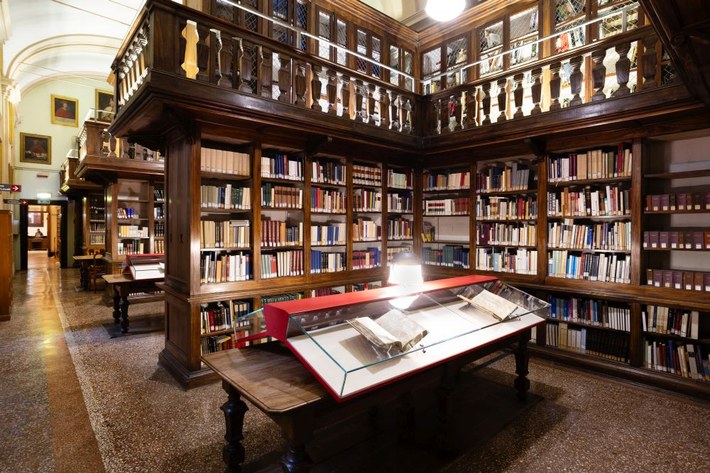
After twenty years, the Museum of Palazzo Poggi has renewed its exhibition layout in order to provide greater coherence, clarity and depth of meaning to one of the symbolic sites of Bologna’s scientific and artistic heritage. The new display raises visitors’ awareness of the role played by the Institute of Sciences in introducing the experimental approach in Bologna and in reforming the ancient university Studium. The museum itinerary continues into the Bologna University Library – part of the ART CITY Bologna circuit this year – connecting to the Aula Magna and the Marsili Museum, both of which are now permanently open to the public. Enhanced by a new lighting system that highlights the wall paintings of the Bolognese school, the refurbished layout introduces innovative digital and multimedia solutions, offering a more engaging and immersive visitor experience within laboratories that have left a lasting mark on the history of European science. The refurbishment was carried out as part of the PNRR project CHANGES – Cultural Heritage Active Innovation for Sustainable Society, funded by the European Union.
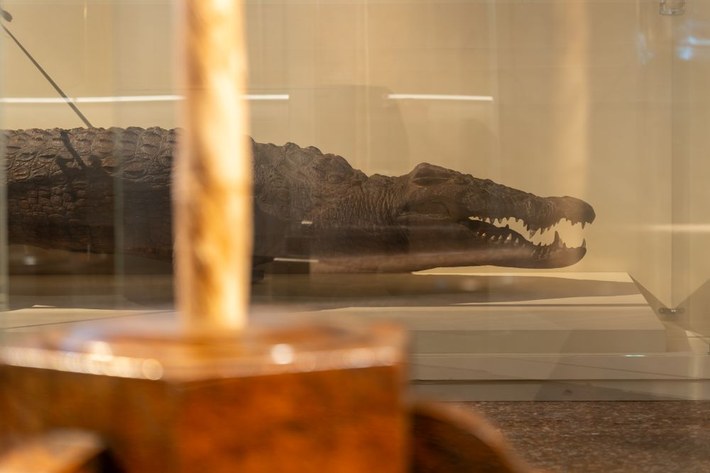
The Specola Museum is also reopening with a new exhibition layout, which from today includes the fifth floor of Bologna’s Astronomical Tower. The result of a collaboration between the “Augusto Righi” Department of Physics and Astronomy and the University of Bologna Museum System, the renewed exhibition route was made possible thanks to the PNRR CTA+ project, funded by the European Union and coordinated by INAF (the National Institute for Astrophysics). Multimedia elements, new panels and a redesigned lighting system guide visitors through the history of astronomy from the seventeenth century to the present day. The itinerary explores the life and career of astronomer Guido Horn d’Arturo, who revolutionised telescope technology, and traces the development of his groundbreaking intuition of segmented mirrors. Scientific instruments and precious watercolour plates, displayed on the sixth and seventh floors and accompanied by interpretative panels detailing their history and features, lead visitors up to the panoramic terrace.
Also at Palazzo Poggi, the Sala Alma Mater is being inaugurated, with free and open access. The room was created thanks to NextGenerationEU funding within the PNRR project Ecosister – Ecosystem for Sustainable Transition in Emilia-Romagna, funded by the European Union. This multimedia space is designed to share with the wider community the thousand-year history of the University of Bologna and its deep-rooted connection with the local area. A video takes visitors on a journey through the centuries, from the University’s medieval origins to the contemporary era, while three interactive tables reveal the historical development and locations of the University, the historical and artistic heritage of Palazzo Poggi, and the research and innovation projects funded by the PNRR in which the University of Bologna is involved.
“The opening of the renewed museum routes marks a wonderful milestone, inviting what we hope will be an ever-growing audience to discover the laboratories of eighteenth-century knowledge – and even earlier, from the sixteenth and seventeenth centuries – in a refreshed and updated form that nonetheless respects particularly valuable elements of past exhibition layouts. I consider this important result both an arrival point and a new beginning. The months of research and study required to devise a new narrative and new interpretative tools return to the community a legacy from the past that is part of the city’s identity, while at the same time marking the start of a path of innovation aimed at making the University’s cultural heritage increasingly inclusive, accessible and capable of promoting ‘the development of culture and scientific and technical research’, as required by the Constitution,” said Rector Giovanni Molari.
On Saturday 31 January, the Specola Museum, the Museum of Palazzo Poggi and the Bologna University Library will be open from 2.00 pm to 8.00 pm, while on Sunday 1 February they will be open from 10.00 am to 6.00 pm. Admission will be free on both days.
The Museum of Palazzo Poggi will also be open free of charge on 3 and 4 February, from 10.00 am to 4.00 pm.
To mark ART CITY Bologna (5–8 February), admission to the Museum of Palazzo Poggi and the Bologna University Library will be free. On Thursday 5, Friday 6 and Sunday 8 February, opening hours will be extended until 7.00 pm; on Saturday 7 February, closing time will be 11.00 pm, in conjunction with the ART CITY White Night.