
A new immersive research environment at the University of Bologna
The IRIS virtual reality facility, introduced at the Forlì Campus, is a reconfigurable VR CAVE supporting research into future mobility, aerospace design and human–machine interaction

The IRIS virtual reality facility, introduced at the Forlì Campus, is a reconfigurable VR CAVE supporting research into future mobility, aerospace design and human–machine interaction

A new field of therapeutic interventions is emerging alongside “molecular” drug treatments: experiences designed to improve brain health or function. UniboMagazine discussed it with Adam Gazzaley, a pioneer of “experiential medicine”

The research group at the Department of Industrial Engineering is taking part in four new Horizon Europe projects under the SESAR Joint Undertaking. Their work focuses on route management, digital flight rules and airport operations
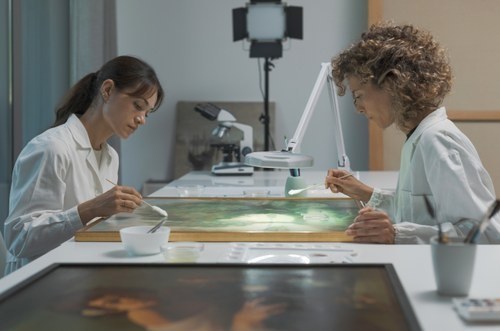
As part of a European project aimed at promoting more sustainable approaches to conservation, a University of Bologna research group has developed a technology that uses non-woven fabrics to selectively remove unwanted layers without damaging the underlying materials

The device will be integrated and tested at the Bologna Integration Hall, a joint centre of excellence established by INAF and the University of Bologna, before being installed on the Extremely Large Telescope (ELT), currently under construction in Chile’s Atacama Desert

A study led by researchers of the University of Bologna analysed for the first time the external three-dimensional shape of the entire heel of Neanderthals, comparing it with that of our species, to show how lifestyle and evolution shaped the skeleton of the foot

This is shown by an analysis based on the longest series of satellite observations ever produced: the loss of ice has raised the global average sea level by more than three centimetres

Engaging citizens, public bodies, businesses and universities in local initiatives: the national picture and the Bologna experience

UniboMagazine spoke to Fabio Sgolastra, Professor at the Department of Agricultural and Food Sciences and one of the authors of a commentary on the issue published in Science

Funded with €1.2 million, the European MagBIO project will develop “magnetobots”, engineered microorganisms capable of moving within the human body, supporting diagnostic monitoring and delivering anticancer drugs. The University of Bologna is among the 18 partners in the international consortium

A series of analyses conducted on the genome of Yakutia’s inhabitants, where low temperatures can reach -70°C, has highlighted certain combinations of genetic variants that can positively regulate physiological functions associated with exposure to cold. And the hybridisation of their ancestors with Neanderthal populations also plays a part