
Why some people keep making the wrong choices
People who are guided mainly by predictive cues risk making ineffective decisions even when experience shows there are better alternatives. This is the mechanism highlighted by a study conducted at the University of Bologna’s Centre for Cognitive Neuroscience (Cesena Campus)

“There are two types of people with two different decision-making profiles: on the one hand, goal-trackers, who rely more on what they have learned through direct experience; on the other, sign-trackers, who instead tend to fixate on — and be guided by — predictive cues"
Why do some people keep making the wrong decisions even when there are signs that better alternatives exist? A group of researchers from the University of Bologna’s Centre for Cognitive Neuroscience at the Cesena Campus looked for answers by analysing how, during decision-making, our brain uses environmental cues associated with rewards, and what happens when those cues stop being reliable.
The results, published in The Journal of Neuroscience , show that some people continue to be influenced by cues that in the past were linked to positive choices, even when those cues no longer point to the best option.
“Our research helps us better understand why some people are more vulnerable to dysfunctional behaviours such as addictions, compulsions, or other difficulties in controlling their choices,” explains Sara Garofalo, Professor at the University of Bologna’s “Renzo Canestrari” Department of Psychology and senior author of the study. “Some environmental cues, such as places, objects or specific situations, can in fact continue to exert a strong influence even when they are associated with negative consequences.”
When we have to make a choice, there are two distinct learning systems we can rely on. On the one hand, we can learn through direct experience: we understand which actions lead to a positive outcome and which do not (for example, which choice allows us to obtain a reward). On the other hand, we can learn to associate environmental cues, such as images, sounds or other stimuli, with the rewards that follow them. When we perceive these “anticipatory” cues, we are motivated to act in order to obtain the positive outcome they are linked to.
In general, these two systems work together effectively. However, when “anticipatory” cues continue to capture our attention even after they have lost their informational value, problems can arise.

To investigate this phenomenon, the researchers conducted a three-phase experiment with sixty participants, involving a virtual slot machine. In the first phase, participants learned to associate the appearance of certain images with winning outcomes on the slot machine. In the second phase, they learned that pulling a specific lever on the slot machine was associated with a high probability of winning. The third phase, finally, was very similar to the second, but with the possible appearance of the images that had previously been associated with the reward. In this case, however, whether the images appeared or not did not affect the chances of winning.
“The data from the experiment show that there are two types of people with two different decision-making profiles,” says Giuseppe di Pellegrino, Professor at the University of Bologna’s “Renzo Canestrari” Department of Psychology and senior author of the study. “On the one hand, there are goal-trackers, people who rely more on what they have learned through direct experience; on the other, there are sign-trackers, who instead tend to fixate on and be guided by predictive cues.”
The researchers noted that in the third phase of the experiment, when predictive cues were present but no longer relevant, sign-trackers made more mistakes than goal-trackers.
“This is not simply because sign-trackers place greater trust in predictive cues, giving them undue weight compared with concrete actions,” adds Di Pellegrino. “The issue is that they struggle to update the value they assign to these cues when circumstances change: they continue to act as if certain stimuli were still relevant, even when they are no longer," he adds.
In short, we do not all learn from the world in the same way: for some people, the problem is not ignoring experience, but remaining anchored to cues and associations that the brain struggles to let go of. Understanding this mechanism better, the researchers stress, could be crucial to help, for example, those who become trapped in substance addiction or other behavioural disorders.
The study was published in The Journal of Neuroscience under the title “Reduced Pavlovian value updating alters decision-making in sign-trackers”. For the University of Bologna, the study involved Luigi Degni, Lorenzo Mattioni, Claudio Danti, Valentina Bernardi, Marco Badioli, Francesca Starita, Giuseppe di Pellegrino and Sara Garofalo from the Centre for Cognitive Neuroscience, operating within the “Renzo Canestrari” Department of Psychology.
-

Sara Garofalo
Sara Garofalo is an Associate Professor of Psychometrics at the University of Bologna’s “Renzo Canestrari” Department of Psychology. In her research, she focuses on understanding and measuring how our brain responds to external stimuli which, once associated with rewards and punishments (in other words, what we desire or fear), can influence our everyday choices. As a science communicator, she has written books and articles and produced videos with various outlets (TED, Il Saggiatore, Il Tascabile, HuffPost UK).
-
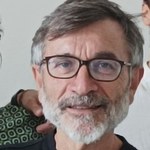
Giuseppe di Pellegrino
Giuseppe di Pellegrino is a Full Professor of Neuropsychology and Cognitive Neuroscience at the University of Bologna’s “Renzo Canestrari” Department of Psychology. He graduated in Medicine and specialised in Neurology at the University of Modena, later earning a PhD in Neuroscience at the University of Parma. He has conducted research in Italy and abroad and is the author of numerous international scientific publications. His research interests focus on the cognitive neuroscience of decision-making. He works at the Centre for Studies and Research in Cognitive Neuroscience at the Cesena Campus.