The latest estimate on female genital mutilation (FGM) in Italy were presented on this occasion. According to research conducted by the University of Bologna and the University of Milano-Bicocca, over 88,500 women in Italy have undergone FGM. This represents a 1% increase compared to the estimates published in 2019, which were also based on a study conducted by the University of Milan-Bicocca.
The data were presented on 23 October in the Council Chamber of the Metropolitan City of Milan, at Palazzo Isimbardi, during an event promoted by the two Universities in collaboration with Amref Health Africa.
FGM is a violation of human rights that affects at least 230 million women worlwide. “Many countries reported a significant decline in this practise: young women undergo FGM less frequently than older women” said Patrizia Farina of the University of Milan-Bicocca, and Livia Ortensi of the University of Bologna, who conducted the research in collaboration with Alessio Menonna of the Fondazione Ismu, within the frame of the DORA ProjectRA. “Considering Italy as of 1 January 2023 – added Farina – it is estimated that there are approximately 88,500 women over the age of 15 who underwent FGM, 98% of whom were born abroad”.
“They are mainly women over the age of 50 – added Farina and Ortensi – and decreases with age”. The communities with the highest absolute numbers are Egyptian, Nigerian, and Ethiopian communities. The research showed that the highest prelavence rates were recorded among Somali (97,8%), Sudanese (90,8%) and Guinean (91,5%) women. In Italy there are 16,000 girls under the age of 15 who are potentially at risk of FGM.
“More and more people in my community discuss FGM and promote a change” stated Paola Crestani, President of Amref Italia. “Those are not my words – added Crestani – they belong to one of the many young people with a migration background who, in Italy, told us in recent years how much they achieved through the Y-ACT project thanks to meetings organised in bars, universities and gathering places, in order to break a taboo and give voice to silence. “This is the only path we know, and we learned it from Africa: dialogue with the communities and all the operators involved. A challenge that, research estimates considered, must be strengthened at all levels, but which gives us hope, looking at the decline in this practice among the younger generations”.
The event “FGM: New estimates and new generations. Interregional training and awareness-raising event on female genital mutilation (FGM)” was introduced by the institutional representatives, with the participations of Diana De Marchi – Delegate for Social Policies, Labour and Equal Opportunities of the Metropolitan City of Milan, Elena Buscemi – President of the Milan City Council, and Maria Carmela Rozza, Regional Councillor of Regione Lombardia.
An excerpt of the research – to be officially published in the coming weeks – identifies the protective factors against FGM, including education level, longer migration history, Country of birth, not having undergone FGM, and belonging to the second-generation.
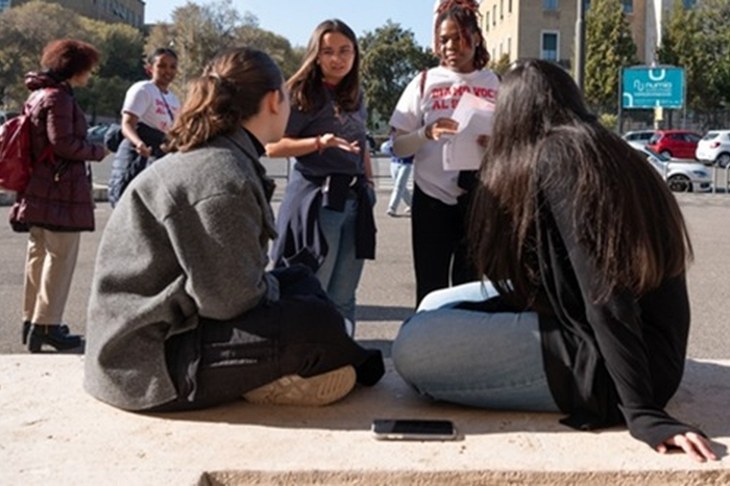
Younger generations played a central role in the event, with the participation of several young women involved in the project Y-Act – co-founded in the beginning by the EU, and recently also by MSD – which aims to prevent and combat the FGM in Italy, by actively involving young people. Among the 30 members of the network, Rowida Ibrahim Khalaf Alla Ghaleb Abdelaziz, Shahd Newir, Sara El Nagar, Jasmina El Shouraky, and Esraa Newir attended the event.
Esraa Newir stated that: “it is important to forcefully reiterate that FGM is not an issue that only affects remote countries. The women who underwent these procedures live here, in our communities, in our neighbourhood. Many of the women we met through the project Y-Act had never told their experiences to anybody, not even their relatives. When they did it, it was very powerful. Our role was not to judge or label those who underwent FGM, but to open doors, to listen and welcome. Only when a woman can speak freely in her own voice does her story stop being pain and become power”.
Giancarlo Santone - Director of the SaMiFo – Salute Migranti Forzati Centre of ASL (Local Health Authority) Roma 1, also took part in the event. An important follow-up event on female genital mutilation will be held in Rome on 8 November, in the Lazio Region.