The Origin of the Record Hailstorm in Friuli-Venezia Giulia on 24 July 2023
A sequence of supercell thunderstorms caused devastating hailstorms – responsible for hundreds of injuries and millions of euros in damage – and generated the largest hailstorm observed in Europe. A group of scholars observed that the main cause of this extraordinary weather event was the strong flow of moisture at high altitude

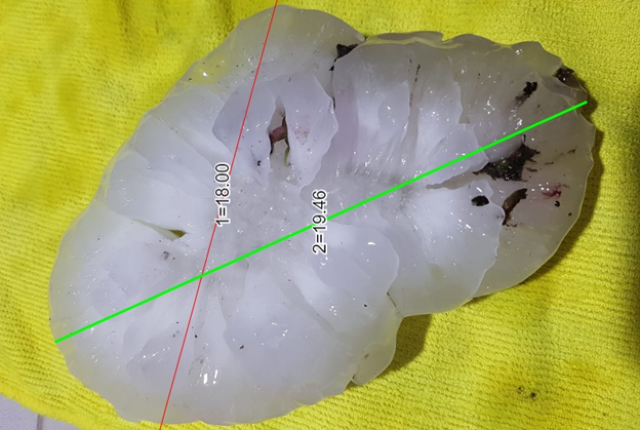
On 24 July 2023, a large area of Friuli-Venezia Giulia was hit by a powerful hailstorm, with hailstones of up to 19 cm in diameter: the largest ever found in Europe. A joint research involving the University of Bologna, Cnr-Isac, ARPA FVG, Radarmeteo and the Czech Hydrometeorological Institute analysed the conditions underlying this extraordinary meteorological event.
The study was published in the Quarterly Journal of the Royal Meteorological Society. It reports that an intense south-westerly wind, at an altitude of about 5 km, combined with very humid Sirocco winds from the Adriatic Sea in the lower layers of the atmosphere, were the most important elements for the formation of the giant hailstones.
"Our investigation showed that a thick, warm and humid layer at an altitude of about one kilometre was pushed by the Scirocco winds from the Adriatic Sea over the cool surface air," explains Francesco De Martin, a PhD student at the 'Augusto Righi' Department of Physics and Astronomy of the University of Bologna and first author of the study. "This layer created the atmospheric instability needed to produce powerful hailstorms, although these conditions are quite frequent in the summer months.”
The meteorological event took place on the evening of 24 July 2023, when an unusual sequence of supercell thunderstorms – i.e. thunderstorms characterised by a deep, persistently rotating updraft – crossed the Alpine foothills, from Piedmont to Friuli-Venezia Giulia, causing devastating hailstorms, responsible for hundreds of injuries and millions of euros in damage. The two most violent of these thunderstorms hit the Friuli plain: the first, at around 9 p.m., devastated the municipality of Mortegliano, in the province of Udine, while the second, two hours later, produced hailstones of up to 19 centimetres in diameter in Azzano Decimo, in the province of Pordenone, setting a new European record in terms of the size of hailstones.
"Interestingly, the surface temperature just before the hailstorm was relatively low for a late July evening, around 20°C," adds De Martin. "This situation seemed unusual, since a very warm air mass near the ground was deemed necessary for the generation of large hailstones."
However, the study highlighted the complexity of the evolution of thunderstorms in the North-East, which are strongly influenced by the region’s topography, making their prediction particularly difficult.
"The really unusual element we found was an intense south-westerly wind in the mid-troposphere, which probably favoured the presence within the storm cell of large updrafts," says Agostino Manzato, a researcher at OSMER - ARPA FVG, currently working at CNR-Isac. "This is a very important factor in the formation of large hailstones, given that they have more space and time to grow."
The results of the case study were confirmed by a statistical analysis conducted between 2018 and 2023 in the North-East. This showed that wind at an altitude of 5 km is the most important parameter for the generation of large hailstones, while – contrary to what was thought before this study – the presence of very warm surface air is not necessary.
"Another unusual condition was the exceptional presence of water vapour between 2,500 and 5,500 metres above sea level," adds Mario Marcello Miglietta, research manager at CNR-Isac. "Increased availability of water within the updrafts likely accelerated the speed of the hailstones’ growth."
The Friuli-Venezia Giulia Regional Meteorological Observatory (OSMER - ARPA FVG) had correctly warned about the possibility of 'devastating hailstorms' for the evening of 24 July, showing that, however difficult, their prediction is possible. The results of this study can therefore help to consolidate techniques for forecasting destructive phenomena of this type, which see Northern Italy among the most affected areas worldwide.