
When Nature Reclaims Its Space
Rewilding is an environmental management approach that seeks to minimise human intervention as much as possible, allowing natural processes to unfold freely. Examples of this strategy are becoming increasingly common, particularly in Northern Europe, although more or less unintentional cases can also be found in Italy

“When we talk about rewilding, we should think of a form of ecological restoration that seeks to re-establish natural processes by limiting or eliminating human influence”
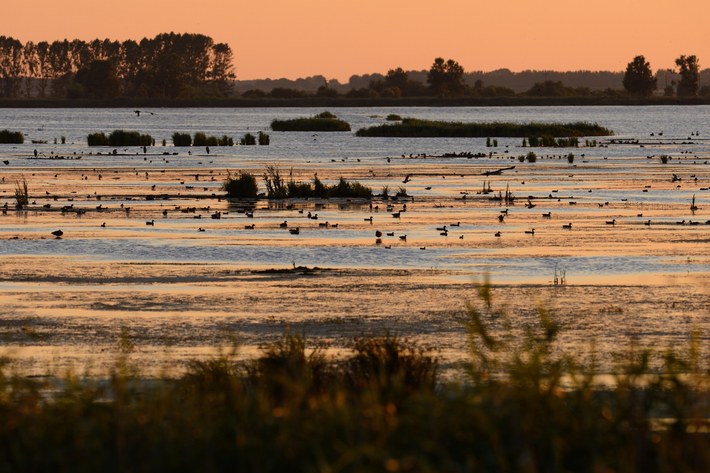
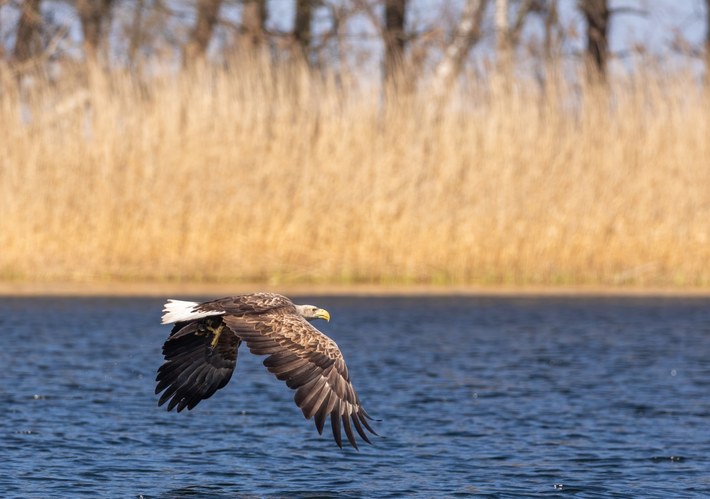
Overlooking the Baltic Sea along the border between Poland and Germany, the Oder River Delta is one of the most biodiverse areas in Northern Europe. Here, terrestrial, marine and freshwater ecosystems intertwine within a single ecological network. Each year, hundreds of thousands of migratory birds pass through this region, which spans around 4,700 square kilometres. They coexist with moose, wolves, European bison, trout, grey seals, deer, lynx, beavers and white-tailed eagles.
Because of its extraordinary natural diversity, the Oder Delta is sometimes referred to as the “Amazon of the North”. A somewhat exaggerated nickname, perhaps, but not entirely misplaced. Like the Amazon, this region is under serious threat from human activity, including infrastructure development, industrialisation and pollution.
For over a decade, researchers, scientists and activists have been working here with a clear objective in mind: rewilding. This approach aims to restore natural processes by reducing or completely removing human intervention.
“When we talk about rewilding, we should think of a form of ecological restoration that seeks to re-establish natural processes by limiting or eliminating human influence,” explains Alessandro Chiarucci, professor at the Department of Biological, Geological and Environmental Sciences at the University of Bologna, who is well acquainted with different biodiversity conservation strategies. Among these, rewilding is becoming increasingly popular, especially in Northern Europe.
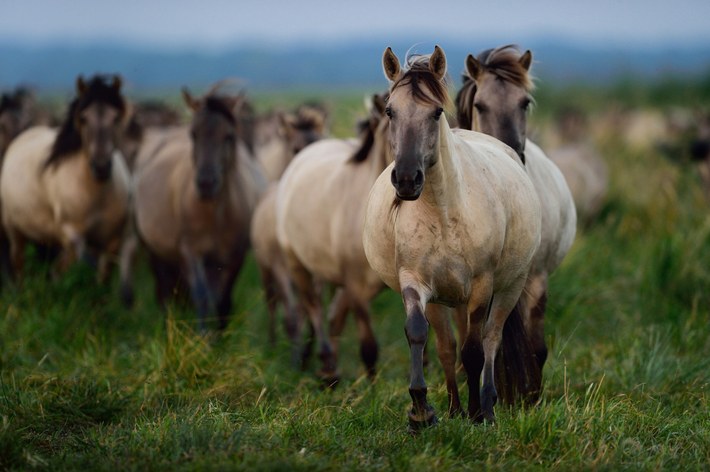
“In countries such as Denmark, Germany, the Netherlands and Sweden, rewilding is an active process,” Chiarucci notes. “In these areas, action is taken both by strengthening nature protection—minimising human intervention—and through targeted measures to restore lost ecological processes. This may include reintroducing large herbivores such as wild horses or European bison, or managing large predators like bears and wolves.”
Human pressure and the cycles of nature
In the Oder Delta, the German-Polish organisation Rewilding Oder Delta has been working for over ten years with a long-term vision: to protect the region and gradually return it to nature.
“The Oder Delta is an extraordinary mosaic of landscapes and an important ecological corridor for the migration of many animal species,” says Peter Torkler, Managing Director of Rewilding Oder Delta. “At the same time, the area is under significant human pressure, between the Baltic coast to the north—affected by growing tourism—and the city of Szczecin to the south, one of Poland’s largest urban centres.”
In response, researchers and activists are working not only to protect this valuable ecosystem but also to restore natural cycles across this vast biodiversity hotspot. For years, they have been involved in projects focused on water management and habitat protection. More recently, they have acquired a former industrial building to transform it into an information centre dedicated to the region’s biodiversity.
“Our efforts aim to highlight the unique value of this area,” Torkler explains. “That is why we are promoting initiatives to support conservation and ecosystem restoration, always working closely with local communities and visitors.”
Abandoned or not managed?
Alongside this form of “active rewilding”, driven by organisations and experts, there is another type that is not limited to Northern Europe. In fact, several examples can also be found in Italy. “This is happening in various parts of our Apennines,” confirms Professor Chiarucci. “It is a form of ‘passive rewilding’, driven by the decline or disappearance of human presence.”
In many hilly and mountainous areas once inhabited, the gradual reduction of agriculture and livestock farming is allowing natural processes—lost for centuries—to re-emerge. These areas are often described as “abandoned”, but experts suggest adopting a different perspective. “We speak of abandoned land—abandoned countryside, abandoned mountains—but this is not entirely accurate,” says Chiarucci. “These are, rather, areas that are no longer used or managed. The absence of human activity does not make them empty; on the contrary, it allows natural processes to return.”
What about climate change?
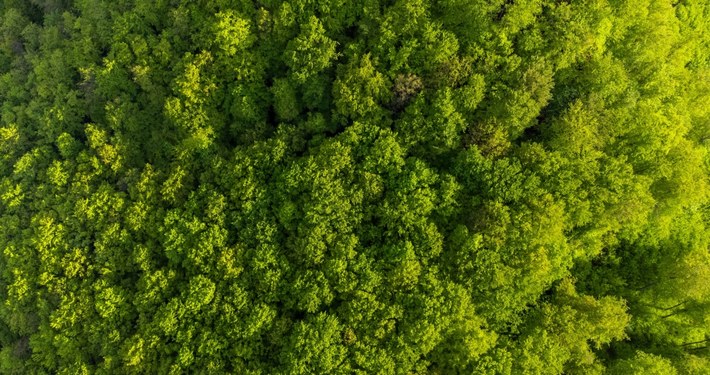
It is estimated that by 2030, around 11% of agricultural land in the European Union—over 20 million hectares—may no longer be used. The solution often proposed to “restore” these areas is tree planting. However, according to researchers Lanhui Wang and Jens-Christian Svenning (Aarhus University, Denmark) and Pil Birkefeldt Møller Pedersen (Lund University, Sweden), rewilding may be a more effective approach.
“Rewilded areas tend to support greater biodiversity and are more resilient to climate change than newly planted forests,” they note in an article published in npj Biodiversity. “Reforestation projects have shown limited capacity to mitigate climate change.”
The potential of rewilding to counter global warming has also been confirmed in Italy, through a study conducted in Tuscany. Utilizzando dati satellitari, l’analisi ha messo a confronto le temperature massime estive registrate nella riserva naturale integrale di Poggio Tre Cancelli, nell’area protetta del Parco di Montioni e in alcune foreste produttive adiacenti.
“In strict nature reserves, where human intervention is minimal, summer maximum temperatures are significantly lower—around two degrees less than in managed forests,” explains Chiarucci, who took part in the study. “These findings highlight the urgent need to strengthen the protection of undisturbed areas and to support the recovery of natural processes.”
Natural parks and strict nature reserves
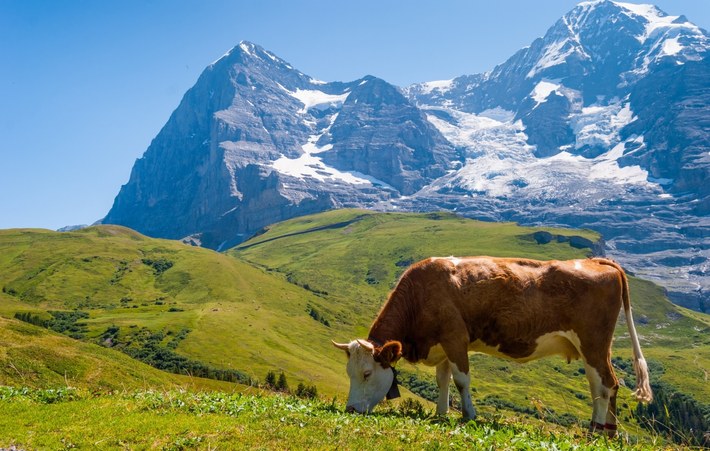
Discussing rewilding also means addressing the role of protected areas and their different levels of protection: a topic that reveals the complexity of land management. “Many areas that are now protected actually preserve habitats shaped by human activity over centuries,” Chiarucci explains. “Take the classic Alpine pasture, with orchids, grazing cattle and mountain landscapes. Today it may be protected as a cultural landscape, but centuries ago these areas may have been forested and later transformed for livestock farming.”
For this reason, rewilding can sometimes conflict with traditional conservation goals, such as preserving cultural landscapes.
“It is not realistic to leave all protected areas entirely to natural processes,” Chiarucci adds.
“However, we can envision allocating a significant portion of land to rewilding.” The European Union has set a target to protect 30% of land and marine areas by 2030. Ideally, one third of this, around 10%, should consist of strict nature reserves.
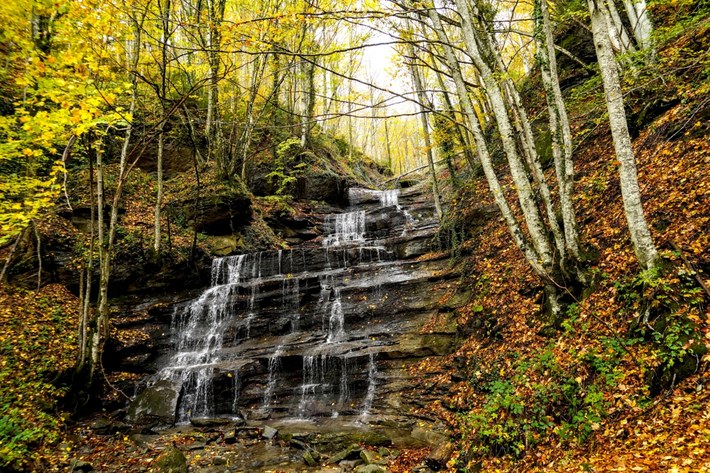
A historic example in Italy is the Sasso Fratino strict nature reserve, located in the Casentinesi Forest National Park. Established in 1959, it was the first of its kind in Italy: public access is restricted and all human interference is prohibited. The result is a forest with exceptional ecological diversity and a rich variety of plant and animal species.
A balance to be found
However, completely excluding human presence is not always possible. In many cases, coexistence between human activity and natural processes is unavoidable, making the involvement of local communities essential. This is precisely what is happening in the Oder Delta.
“The key difference between wilderness and rewilding lies in finding a balance that also includes people,” says Peter Torkler. “We are dealing with a landscape shaped by human activity over centuries. We cannot expect it to return immediately to its original state. Instead, we must work with local communities to highlight the value of biodiversity and rebuild natural processes.”
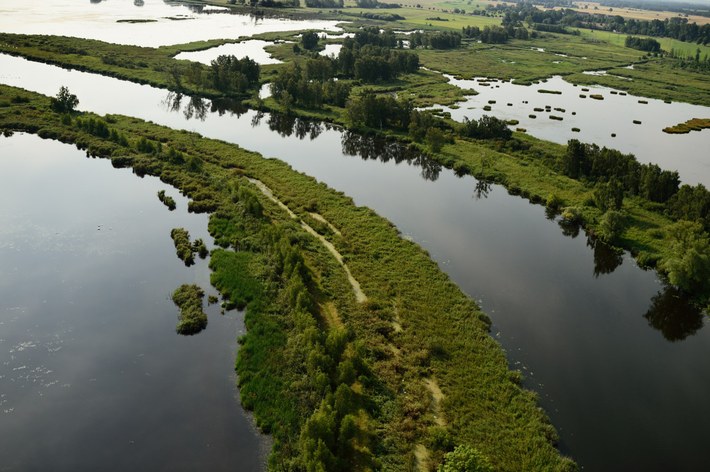
The work of Rewilding Oder Delta brings together NGOs, institutions, landowners and ecotourism organisations. The region’s unique landscape—linking lagoons, coastal beech forests, wetlands, peatlands and floodplains—is increasingly appreciated and supported by the public.
A survey conducted by German and Polish research institutes found that citizens in both countries are willing to contribute financially to rewilding initiatives in the Oder Delta, including the reintroduction of large herbivores and predators such as wolves. However, local residents are more cautious about the return of large predators—understandably so. Mediating between natural spaces and human activities remains the most complex challenge of rewilding.
“This is a remote region, sparsely populated and far from the conveniences of modern life,” Torkler concludes. “But those who live here have a strong connection to this land. That is why dialogue is essential: to find solutions that allow nature to reclaim more space while respecting the needs of local communities.”
-

Alessandro Chiarucci
Alessandro Chiarucci is a full professor in the Department of Biological, Geological, and Environmental Sciences. A botanist and ecologist, he studies biodiversity from macroecological and biogeographical perspectives, with a particular focus on plant communities and their functional and structural roles in terrestrial ecosystems.