An Ingenious Water Management System in the Ancient Roman City of Thuburbo Maius, Tunisia
It was discovered inside one of the most important — and until now least studied — houses of the archaeological site: the House of Nicentius. The find was made by an Italian-Tunisian mission involving the University of Bologna, the National Heritage Institute of Tunisia, and the University of Manouba

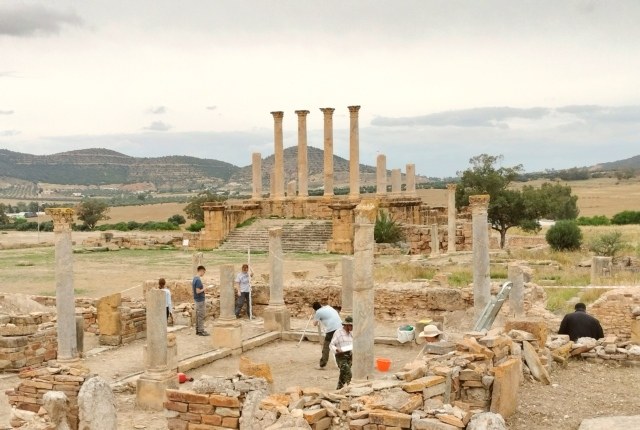
An ingenious water management system has been uncovered in the House of Nicentius, one of the most significant and, until recently, least explored residences in Thuburbo Maius, an ancient Roman city located about 60 kilometres southwest of Tunis.
The discovery was made during the most recent excavation campaign carried out by the archaeological mission coordinated by the University of Bologna’s Department of History and Cultures, in collaboration with the National Heritage Institute of Tunisia and the University of Manouba.
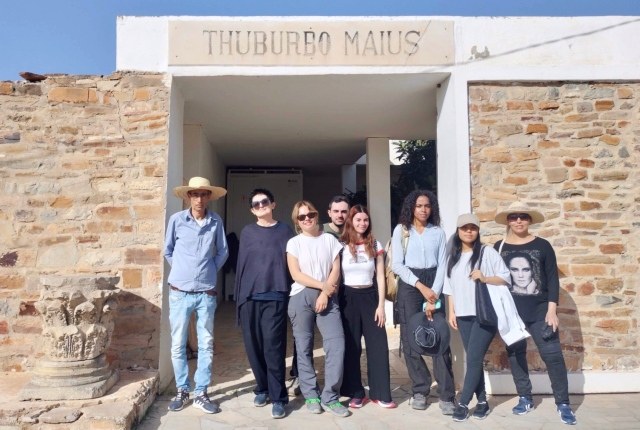
The project, titled “Thuburbo Maius: City and Territory,” is supported by the Italian Ministry of Foreign Affairs and International Cooperation and by Alma Scavi. Italian and Tunisian students are working side by side with researchers and technical experts to document, map, and study this vast archaeological area.
Situated in one of the most fertile regions of northern Tunisia, the ancient city of Thuburbo Maius once covered around 40 hectares and still preserves well-conserved remains of an impressive urban layout, including an extensive system of cisterns, wells, and channels.
“Thuburbo Maius reached its peak between the second and third centuries,” explains Professor Antonella Coralini of the University of Bologna, who coordinates the archaeological mission together with Hamden Ben Romdhane and Lamia Ben Abid. “The city occupied a strategic position, which made it an important hub for the region’s trade routes.”
The first archaeological excavations began in the early twentieth century and continued through the 1970s and 1990s, but many areas remain unexplored and new investigations are needed to interpret the evidence uncovered so far.
It was precisely by re-examining earlier excavations that the team brought to light, for the first time, a complex water management system within one of Thuburbo Maius’s most prominent residences, the so-called House of Nicentius.
“Water management played a key role in Thuburbo Maius, as shown by the dense network of canals and public baths, along with cisterns, wells, and large thermal complexes,” adds Professor Coralini. “All these elements reveal the advanced technological capabilities of the ancient Romans, who most likely faced — and addressed — the same water scarcity issues that still affect the region today.”
During the same excavation campaign, the Italian-Tunisian team also explored and surveyed parts of the site located outside the city gates. Their ongoing work aims to preserve and enhance this remarkable archaeological heritage, which will continue in the autumn with a new excavation campaign focused once again on water management and urban greenery.