From Imago Scientiae to Imago Digital: Projects on Ulisse Aldrovandi’s Woodblocks
An unprecedented perspective on Ulisse Aldrovandi's woodblocks, created with the aim of enhancing the scientist's xylographic matrices preserved at the Palazzo Poggi Museum of the University Museum System and the University Library of Bologna

“From Imago Scientiae to Imago Digital. An unprecedented perspective on Ulisse Aldrovandi's woodblocks" is the title of the project carried out by a group of researchers from the University of Bologna in collaboration with the Academy of Fine Arts of Bologna. The objective was to enhance the value of Ulisse Aldrovandi's (1522-1605) woodcut matrices, preserved at the Palazzo Poggi Museum of the University Museum System - SMA and the Bologna University Library - BUB.
These matrices, of extraordinary importance for the history of naturalistic illustration and scientific dissemination, became the subject of a complex research process that combined cutting-edge digital technologies and traditional printing practices. This approach made it possible to make a largely unpublished corpus accessible, fostering an interdisciplinary dialogue between the history of science, the visual arts, and technological innovation.
The project began with high precision scanning and 3D printing activities (by Professors Roberto Balzani and Lucia Corrain), overcoming complex technical challenges thanks to the support of research groups coordinated by Professors Gabriele Bitelli and Luca Vittuari (Department of Civil, Chemical, Environmental and Materials Engineering – DICAM). Through structured-light scanning systems and advanced digital restoration techniques, it was possible to obtain highly accurate three-dimensional models capable of reproducing the flatness of the engraved surfaces and minimising distortions.
The processing generated files of considerable size (amounting to several gigabytes), which were entirely printed in a single block by a highly specialised company, thereby avoiding the traditional segmentation that would have compromised the precision of the matrix reconstruction.
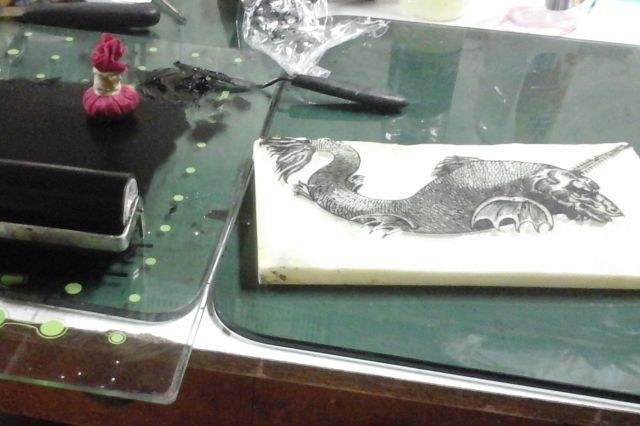
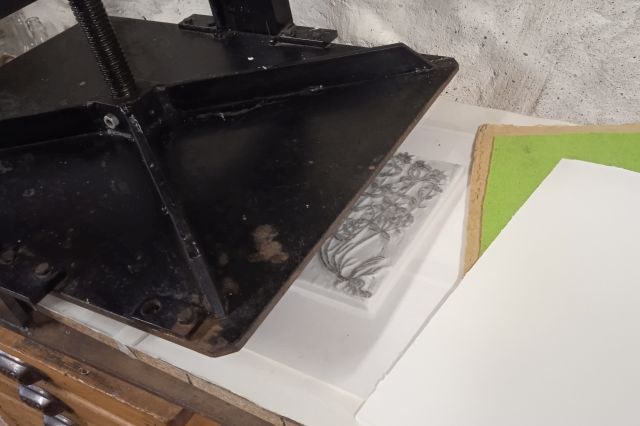
The three-dimensional-printed proofs were then used by Professor Manuela Candini (Academy of Fine Arts of Bologna) to produce intaglio prints on paper, thus restoring the original function of the woodblocks and offering the public previously unpublished works. This phase represented a crucial moment of integration between engraving tradition and technological experimentation, underlining the project's ability to transform historical heritage into a living field of research and innovation.
The research process culminated in the creation of a new permanent room at the Palazzo Poggi Museum, dedicated to woodblocks and Aldrovandi's editorial project. Presented on the occasion of the exhibition The Other Renaissance: Ulisse Aldrovandi and the Wonders of the World, the gallery registered over 33,300 visitors, with a very high degree of satisfaction (92.7% positive feedback and 89.5% reporting an increased understanding of Aldrovandi's work).
In terms of digital and educational enhancement, the project has produced two new educational paths for schools and several outreach itineraries focusing on Aldrovandi's figure. In parallel, the MODE – Museo Officina dell'Educazione (Education Workshop Museum), under the scientific direction of Professor Chiara Panciroli, introduced innovative technological tools: an interactive chatbot based on artificial intelligence integrated into the Drupal platform, video content produced with generative AI techniques, and deepfake animations to evoke the voice and presence of the scientist.
The project "From Imago Scientiae to Imago Digital" has demonstrated how the synergy between artisanal and artistic knowledge and emerging digital technologies can produce a virtuous model of cultural enhancement. The permanence of the exhibition gallery at the Palazzo Poggi Museum and the ongoing development of educational and multimedia initiatives constitute a lasting legacy, capable of projecting Aldrovandi’s scientific and iconographic heritage into the future.
Photo: © Museo di Palazzo Poggi | Sistema Museale di Ateneo - Università di Bologna