
Green energy and inclusion: the challenge of Renewable Energy Communities
Engaging citizens, public bodies, businesses and universities in local initiatives: the national picture and the Bologna experience

Engaging citizens, public bodies, businesses and universities in local initiatives: the national picture and the Bologna experience

Funded with €1.2 million, the European MagBIO project will develop “magnetobots”, engineered microorganisms capable of moving within the human body, supporting diagnostic monitoring and delivering anticancer drugs. The University of Bologna is among the 18 partners in the international consortium

The professor of the Department of Electrical, Electronic, and Information Engineering "Guglielmo Marconi" – DEI at the University of Bologna has received one of the most prestigious awards in the field of dielectrics and electrical insulation

With more than 60 million stars, the image could help confirm the existence of exoplanets and measure their masses through variations in starlight

At the University of Bologna, international experts reviewed the current state of knowledge on the exposome, discussing the role of Artificial Intelligence, organoids and European projects on climate, cities and health

The analysis of a fossil humerus preserved in the Geology Collection “Museo Giovanni Capellini” of the University of Bologna documents one of the oldest known cases of healing from a severe fracture in cave lions. The study, led by the University of Padua, provides rare insights into the lives and survival strategies of the great predators of the Pleistocene

A team of students from the University of Bologna has been selected to trial a multi-robot orbital system for space debris removal at the Orbital Robotics Laboratory of the European Space Agency

A University of Bologna research team has helped develop a smart mask for continuously and non-invasively monitoring astronauts’ sleep quality

New frontiers in chemistry to address the challenges of climate, energy and resource scarcity, and research as a shared human effort serving equality and sustainability

From the importance of a global vision for scientific research to studies on extracting water from air, one of the leading figures in contemporary chemistry will address the challenges of climate, energy and resource scarcity for a sustainable planet

There were at least seven individuals, who lived around 100,000 years ago: the study – coordinated by scholars from the University of Bologna – stems from the analysis of ancient mitochondrial DNA from eight teeth found in the Stajnia cave in Poland

A team at the University of Bologna has developed a device capable of reproducing in the laboratory the oxygen gradients typical of human tissues. The technology, already patented and at the heart of an academic spin-off, opens new avenues for oncological research and the development of new therapies.

Developed during the Covid-19 lockdown at the Department of Interpreting and Translation, ReBooth is now used in Kharkiv and Beirut, helping ensure continuity in training even when access to classrooms is limited or impossible
In the new digital systems that make it possible to record information in a secure, transparent and unalterable way, trust is not eliminated, but reconfigured through technological protocols, governance mechanisms and relationships between the various actors involved

The University of Bologna has inaugurated new research infrastructures dedicated to equipment and machinery for precision agriculture, digital systems and innovative solutions for the sustainability of agricultural systems. Over €12 million in investments from PNRR funds, within the national AGRITECH project, will support the testing and development of the agriculture of the future
The programme will bring cutting-edge scientific research to industrial application in the field of energy integration
From renewables to carbon capture and storage: where do we stand with the energy transition in a world cyclically marked by geopolitical crises? UniboMagazine discussed it with Professor Ezio Mesini
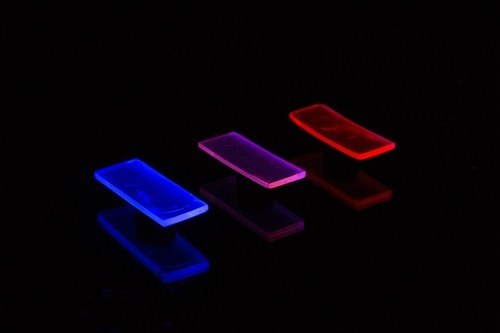
A new invisible marking technology aims to make plastic recycling more efficient and competitive. ELISET, a European project worth €2.36 million, is bringing to market a solution developed from research initiated at the University of Bologna and later advanced through the spin-off Sinbiosys
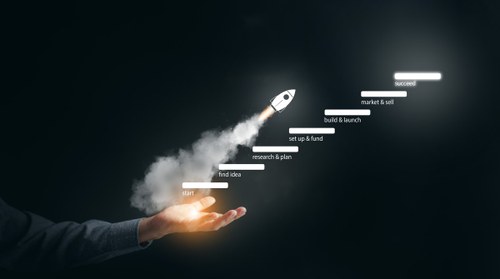
Two examples from the University of Bologna’s entrepreneurial ecosystem, which today includes 62 accredited companies spanning spin-offs and student startups

Produced by five PhD students from the University of Bologna’s International PhD College, the podcast examines artificial intelligence from multiple perspectives and reflects on its role in politics, science and everyday life
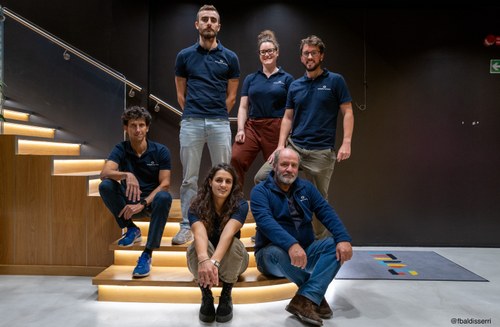
The University of Bologna deep-tech spin-off is set to validate a technology in space that is recognised as a strategic priority for Europe
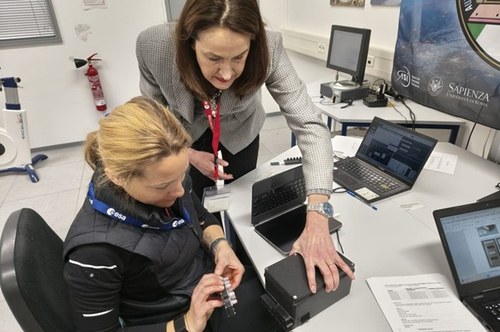
Thanks to the synergy between chemistry and aerospace engineering, the compact analytical device is ready for the first microgravity experiments with astronaut Sophie Adenot
Seven European partners - including universities and research centres - will collaborate to develop low-energy digital systems through reversible computing
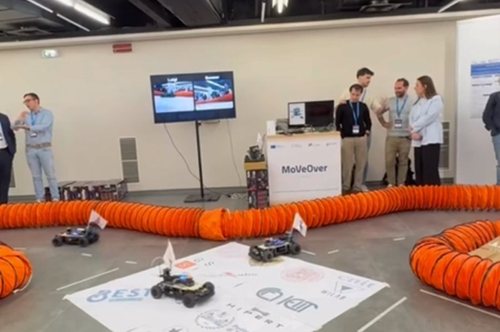
Signal-free junctions navigated seamlessly by vehicles that communicate with one another: the demonstration coordinated by the University of Bologna has won an award within the framework of the PNRR-funded Restart programme
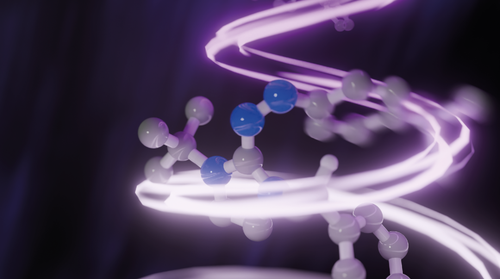
Designed, built and tested by a research group at the University of Bologna, it is the only nanomotor in the world able to reverse its direction of rotation simply by changing the colour of the light source that powers it
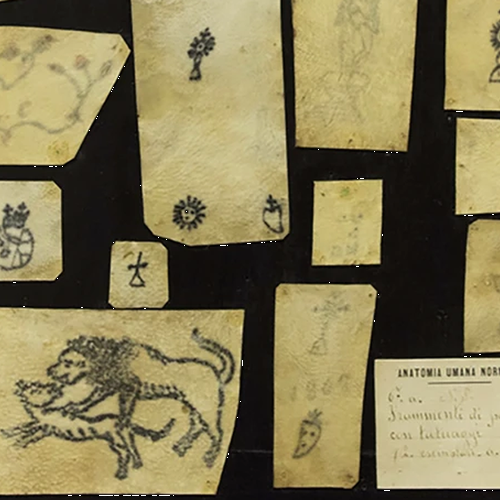
The analysis of the ancient artefacts preserved in the “Luigi Cattaneo” Anatomical Wax Collection of the University of Bologna has revealed a new perspective on the material and symbolic culture of the 19th century, including religious motifs and themes of a personal, amorous and erotic nature
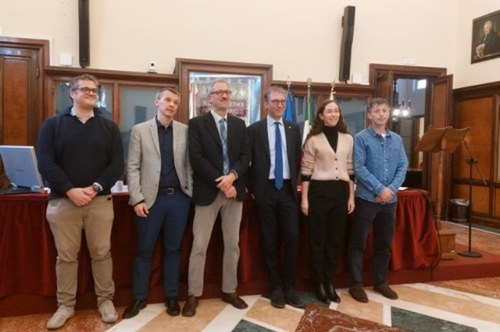
With four projects and total funding of 11 million euros, the University of Bologna is the Italian university with the highest number of grant holders in the latest ERC Synergy Grants and one of the most successful in the European Union. From the cohabitation between humans and animals on an increasingly fragile planet to the earliest microseconds after the Big Bang; from the ultra-fast processes of the photochemical reactions to the unsolved questions on the universe expansion, the participating researchers will join their forces to address some of the most complex challenges in contemporary science
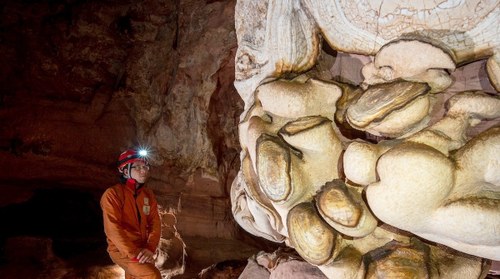
Thanks to portable technologies, an international team has carried out in situ analyses of silica stromatolites in the Imawarì Yeutà cave, opening up new perspectives for planetary exploration as well. Research groups led by Martina Cappelletti from the University of Bologna and speleologist Francesco Sauro from the University of Padua are among the authors of the study
Gathered at the University of Bologna, some of the world’s leading scholars and experts in artificial intelligence have drawn up a Manifesto for a cohesive institution grounded in human capital, interdisciplinary collaboration and a strong theoretical foundation, governed with transparency and independence
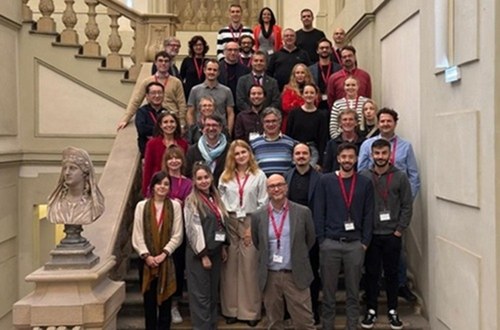
Coordinated by the University of Bologna, the project brings together 35 partners from 11 countries to develop interdisciplinary training pathways in Virtual Worlds
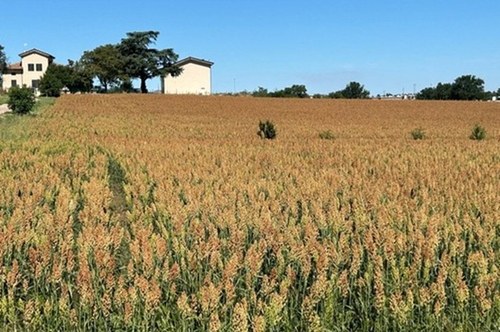
EU institutional representatives, researchers and international stakeholders will be at the Department of Agricultural and Food Sciences (DISTAL) to discuss about climate-change challenges. The meeting is arranged by DG CLIMA and CINEA
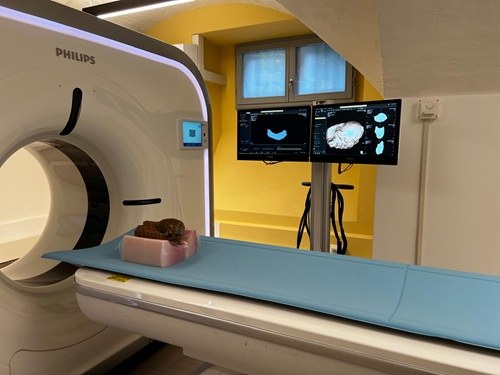
Thanks to the first computerised tomography scanner in Italy used exclusively for research, the three fossil specimens were analysed to explore their internal and external morphology and to investigate their original contents and shell structure
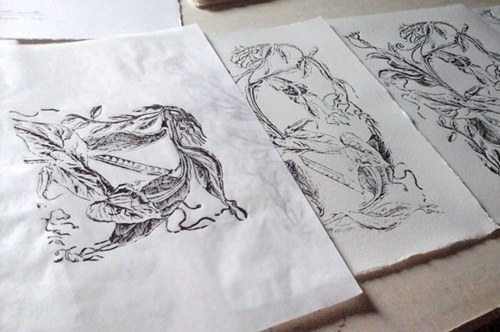
An unprecedented perspective on Ulisse Aldrovandi's woodblocks, created with the aim of enhancing the scientist's xylographic matrices preserved at the Palazzo Poggi Museum of the University Museum System and the University Library of Bologna

The six best videos on artificial intelligence — exploring the opportunities and risks of its use in today’s world — will be awarded in the contest organised by the Alma Mater Research Institute for Human-Centered Artificial Intelligence (ALMA-AI)
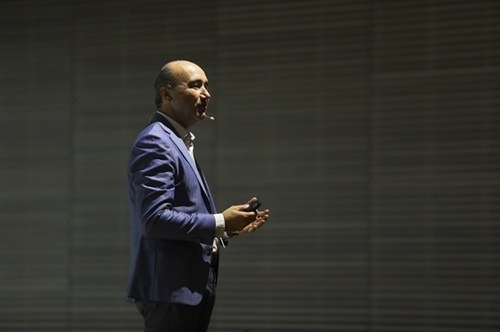
An international study coordinated by the University of Bologna has developed a decalogue to explore the potential of AI in creative processes, its opportunities and risks, and to outline possible future scenarios
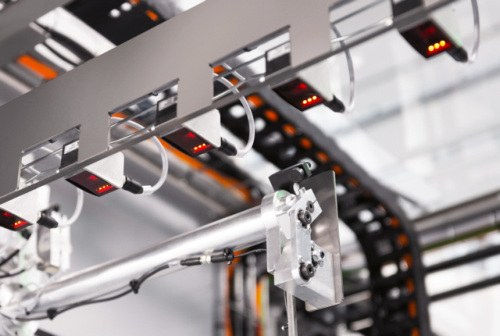
The new joint project between the University of Bologna and IMA aims to design innovative technological systems for packaging, also driven by artificial intelligence technologies, capable of carrying out highly complex manipulation, gripping, and control tasks, with two key requirements: flexibility and autonomy
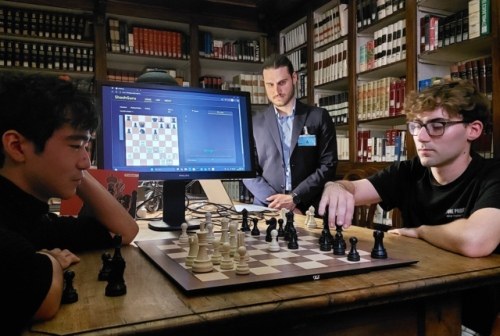
It’s called ShashGuru and it can explain chess games while they are being played. In real time, it reveals players’ strategies and the reasoning behind each move, using clear and accessible language that even non-experts can follow
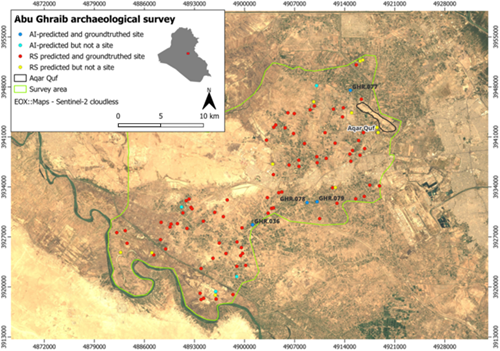
A team of scholars at the University of Bologna has developed an artificial intelligence system that can automatically recognise archaeological sites. Using satellite images from the CORONA espionage programme of the 1960s, it has revealed four ancient human settlements that had previously gone unnoticed by archaeologists
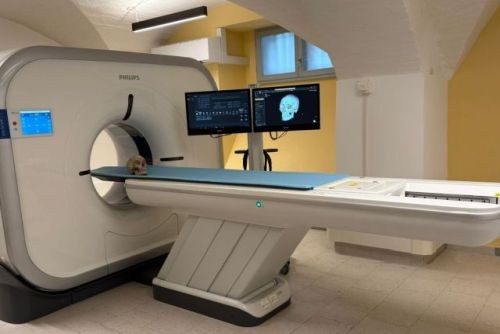
The new Philips Incisive CT scanner was presented at the University of Bologna’s Anatomy Centre: with this unique project, anatomical dissection—one of the oldest scientific practices—merges with cutting-edge digital technologies, generating new knowledge and paving the way for increasingly personalised, safe and effective healthcare and training models
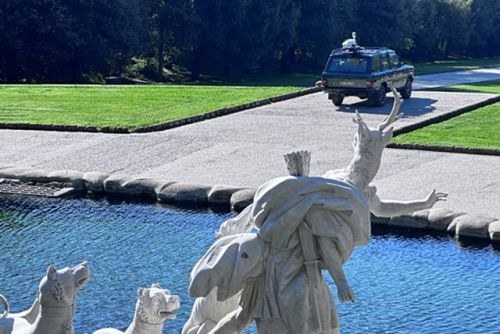
The technology used by the University of Bologna is the only one of its kind in Italy. It is being used for the first time in a historic park that is part of a UNESCO World Heritage site

Research carried out by the University of Bologna's Department of Agricultural and Food Sciences, in collaboration with the Animal and Food Genomics Group and other University departments, has characterised the pig metabolome for the first time, opening up new possibilities for combining genetics and nutrition with applications in biomedicine and animal production
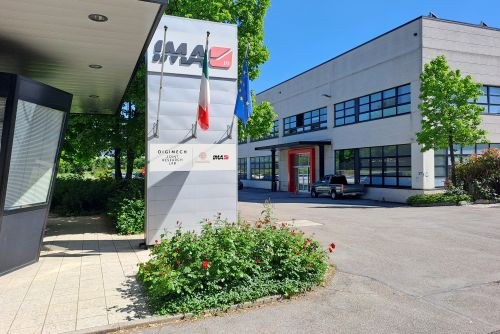
It is called "Digital and Mechatronic Research & Innovation for Automated Machinery and Systems" - DIGIMECH, and it serves as a meeting point between the academic and industrial worlds, aiming to promote innovation, research, and training in strategic and high-tech fields
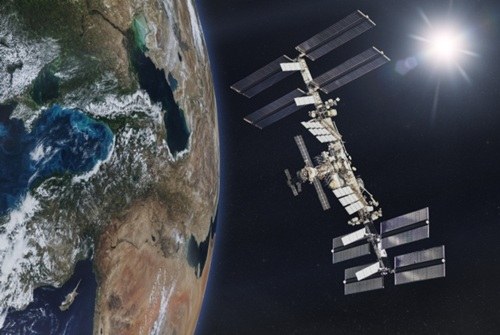
Financed by the Italian Space Agency and carried out by the Italian National Institute of Nuclear Physics (INFN) - TTLab (Technological Transfer Lab) in collaboration with the University of Bologna, the sensors can detect and transmit in real time the dose of ionising radiation received by the wearer to the Operations Centre, on the ground or at the Space Base, allowing the activation of an immediate alarm in case of overexposure
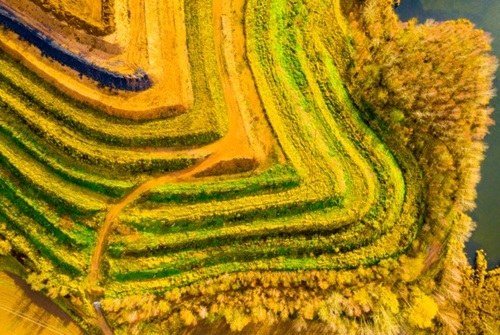
The Horizon Europe MINEYE project is developing new technologies to enhance the EU’s ability to access strategic metals and minerals, while also addressing environmental and social impacts. The University of Bologna is involved in both exploration efforts, as well as the management and monitoring of mineral residues

Thanks to advanced machine learning models, the new GrAiCE dataset offers an accurate reconstruction of variations in freshwater reserves, highlighting the impact of extreme weather events on water resources
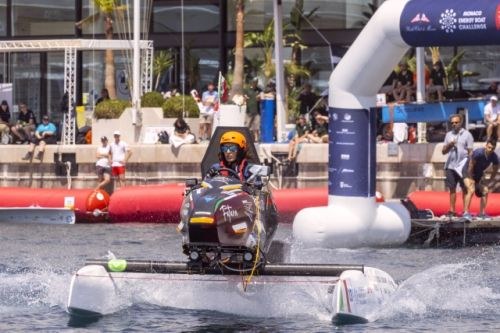
Conceived by the UniBoAT team from the Department of Industrial Engineering, the motor employs counter-rotating and tractor propellers—an innovative and sustainable solution for maritime transportation
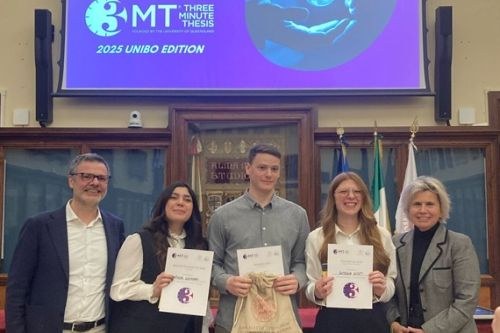
A PhD student in Physics, he will represent the University in the European selection of the 3MT Competition, an academic challenge to deliver the most compelling presentation of a research project in just 180 seconds

Conceived, written and recorded by the PhD students of the International PhD College. It is a dissemination project, created to talk about university and all the possible paths, featuring contributions from the academic world and other professional sectors