First Images of the Sky from the Rubin Observatory: University of Bologna Among the Leading Partners
A “movie” of the evolving universe over ten years: the contribution of the Department of Physics and Astronomy “Augusto Righi” to the telescope that will revolutionise astronomical observation

The Vera C. Rubin Observatory, one of the most ambitious projects in contemporary astrophysics, has unveiled its first images after two years of anticipation. Based in Chile and equipped with the most advanced telescope in the world – featuring a primary mirror with a diameter of 8.4 metres – it is set to revolutionise the way we observe the cosmos. The Department of Physics and Astronomy “Augusto Righi” (DIFA) of the University of Bologna has played a key role in this international endeavour.
The Rubin Observatory hosts the largest digital camera ever built, the LSSTCam, with over 3.2 gigapixels. It boasts the widest field of view ever achieved by a ground-based telescope and uniquely integrates its primary and tertiary mirrors in a single glass structure – a first in optical engineering.
“The first images are clear: in just over ten hours, nearly 2,000 new asteroids have been discovered. And this is only a glimpse of the Rubin’s extraordinary potential,” says Alessio Taranto, a PhD student involved in the project.
Once fully operational, the telescope will scan the entire southern sky every three nights, over a ten-year period, effectively creating a “movie” of the sky. The goal is not simply to observe individual objects, but to monitor the evolution of the universe, opening new frontiers in the study of cosmology, dark matter, celestial variability and the exploration of the Solar System.
Thanks to collaboration with the INAF – Astrophysics and Space Science Observatory of Bologna, led by Gabriele Rodeghiero, researchers and PhD students from DIFA have actively participated in key verification and commissioning phases of the telescope.
“We’ve been active for around three years,” continues Alessio Taranto, “and our contribution has evolved over time, from engineering work to the scientific characterisation of the telescope’s optical system.”
The team’s initial task was to verify the functioning of the cell housing the secondary mirror, currently the largest of its kind in the world. They tested sensors for temperature, position and deformation, to ensure the correct operation of this essential optical component.
Attention then turned to verifying the active optics system, which maintains the telescope’s focus during nighttime observations to optimise image quality. Thanks to the commissioning of the test camera, installed in October last year, detailed testing began to evaluate the system’s performance.
DIFA’s current focus is on so-called “stray lights” – parasitic light that interferes with the image quality of the LSSTCam scientific camera, caused by bright stars outside its field of view. By combining expertise in optics and image analysis, researchers have conducted targeted observations to identify the sources and propose solutions. This work has seen the University of Bologna take on a leading scientific role within the international collaboration.
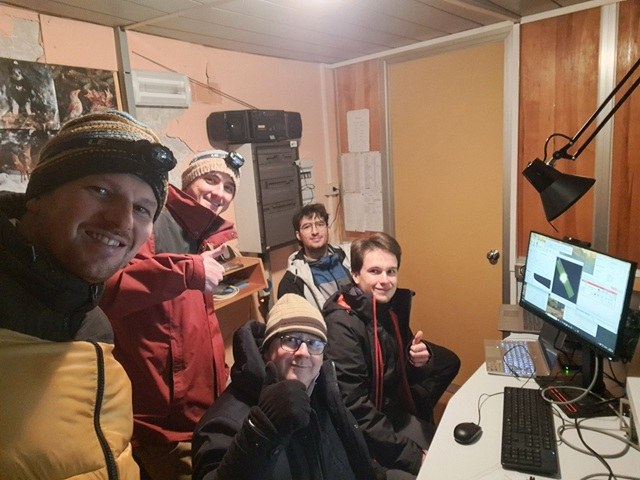
Alongside Alessio Taranto, Luca Rosignoli has also contributed to the project through his PhD research at DIFA, while Gabriele Umbriaco has played a key role in training PhD students through laboratory and instrumentation work in preparation for field missions at the Vera Rubin Observatory.
“This telescope will help revolutionise astronomy, and the very way we do astronomy. Every number associated with the Rubin Observatory seems exaggerated – almost surreal: it will observe billions of stars in our galaxy and billions of distant galaxies, catalogue millions of Solar System objects, and generate millions of alerts for transient events every night. It’s hard for the scientific community to fully imagine the potential a facility like this will bring to astrophysics,” says Luca Rosignoli. As a young researcher, I can only say how enriching and inspiring it has been to be part of this project. DIFA and INAF gave me the opportunity to step into the Rubin world: an international, well-organised and human environment that has been formative both technically and personally.”
The contribution of the Department of Physics and Astronomy “Augusto Righi” confirms the University of Bologna’s central role in major international astrophysics projects.
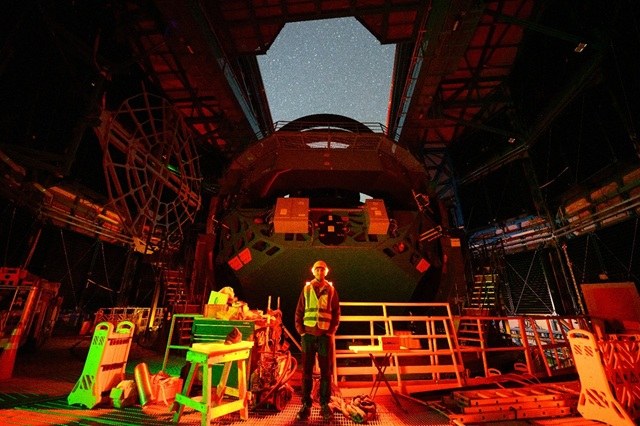
Above, photo by Luca Rosignoli at the Vera C. Rubin Observatory (Cerro Pachón, Chile): the Milky Way from the southern sky