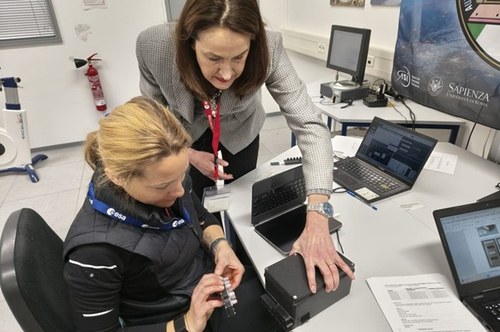
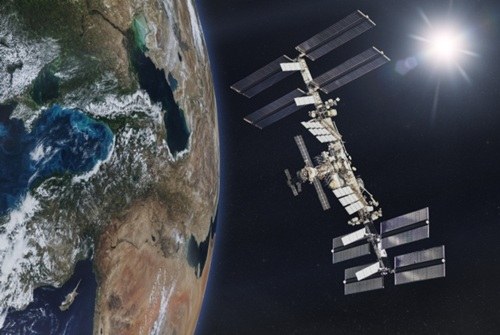
APHRODITE Project: Italian lab-on-chip technology debuts on the ISS
Thanks to the synergy between chemistry and aerospace engineering, the compact analytical device is ready for the first microgravity experiments with astronaut Sophie Adenot
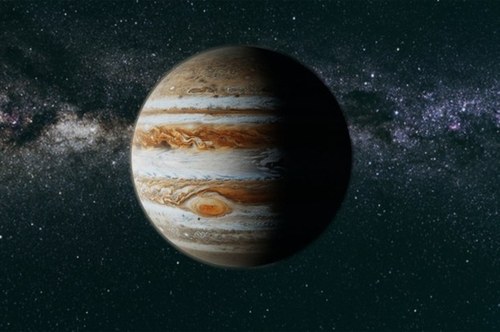
New data from NASA’s Juno mission and the Hubble Space Telescope have enabled scientists to determine the planet’s shape with an uncertainty of just 0.4 kilometres: the gas giant’s radius is 8 kilometres smaller than previous estimates suggested
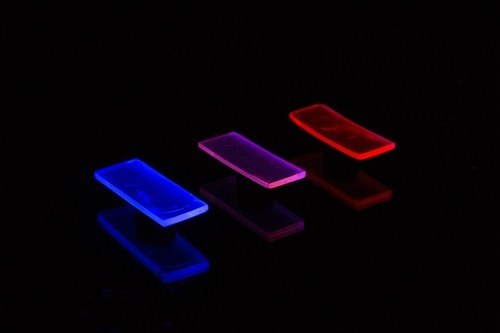
Designed, built and tested by a research group at the University of Bologna, it is the only nanomotor in the world able to reverse its direction of rotation simply by changing the colour of the light source that powers it
From the first images of the sky to the survey that will scan the cosmos for ten years: the Department of Physics and Astronomy “Augusto Righi” (DIFA) is playing a key role in a telescope set to transform astronomical observation. Members of the team share the story
With four projects and total funding of 11 million euros, the University of Bologna is the Italian university with the highest number of grant holders in the latest ERC Synergy Grants and one of the most successful in the European Union. From the cohabitation between humans and animals on an increasingly fragile planet to the earliest microseconds after the Big Bang; from the ultra-fast processes of the photochemical reactions to the unsolved questions on the universe expansion, the participating researchers will join their forces to address some of the most complex challenges in contemporary science
The new ERC project ARTEMIS, coordinated by Viviana Cavaliere at the Department of Physics and Astronomy “Augusto Righi” of the University of Bologna, will use advanced neural networks to study the interactions of the Higgs boson
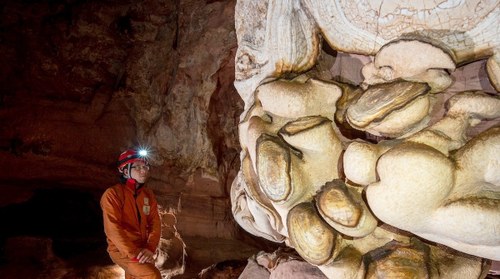
Thanks to portable technologies, an international team has carried out in situ analyses of silica stromatolites in the Imawarì Yeutà cave, opening up new perspectives for planetary exploration as well. Research groups led by Martina Cappelletti from the University of Bologna and speleologist Francesco Sauro from the University of Padua are among the authors of the study
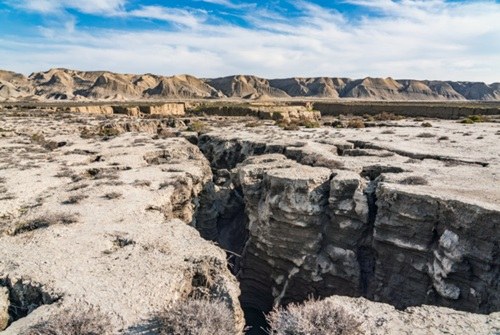
Financed by the INGV (National Institute of Geophysics and Volcanology) and co-coordinated by the University of Bologna and INGV, SAKURA research project aims to study closely the part of the Earth’s mantle lying between 80 and 200 kilometres under the globe’s surface. The focus is on the Mediterranean area with a particular attention to both the Phlegraean Fields and Ischia, and the Adriatic Sea
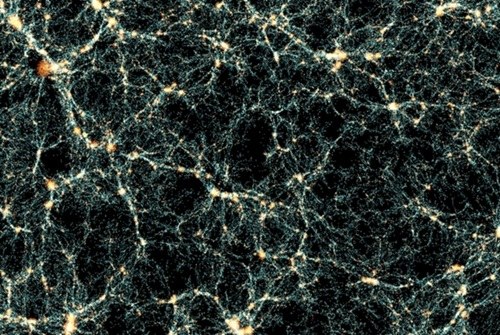
Developed by Euclid Consortium, it includes 3.4 billion galaxies, each described by more than 400 physical properties, including luminosity, position, velocity and shape. Its purpose is to help the scientists interpret the Euclid telescope’s observations and study the origin of the “cosmic web” and the nature of dark energy and dark matter
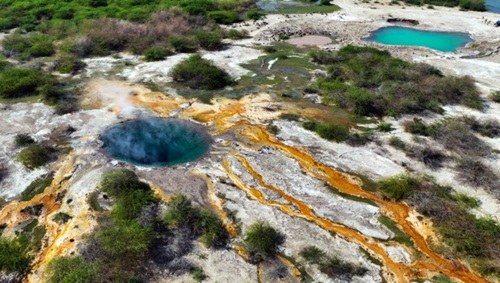
The Allalobad geothermal field is a “Martian analogue”: its extreme conditions resemble those that might have existed billions of years ago on the surface of Mars. In this extraordinary and inhospitable place, a research team led by the University of Bologna is working to understand how and where to look for traces of extraterrestrial life
A “movie” of the evolving universe over ten years: the contribution of the Department of Physics and Astronomy “Augusto Righi” to the telescope that will revolutionise astronomical observation
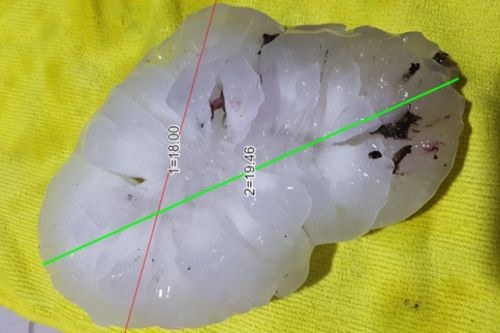
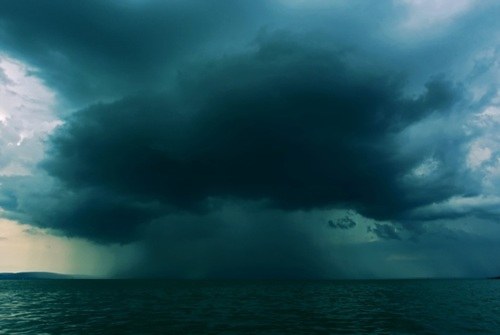
A sequence of supercell thunderstorms caused devastating hailstorms – responsible for hundreds of injuries and millions of euros in damage – and generated the largest hailstorm observed in Europe. A group of scholars observed that the main cause of this extraordinary weather event was the strong flow of moisture at high altitude
The new research project BactEradiX, funded by the European EIC Pathfinder programme and coordinated by the University of Bologna, will develop a modular nanoplatform capable of degrading the extracellular matrix of bacterial biofilms, which enables pathogens to resist drugs and the immune system
The shipwreck that occurred on the night of 19 August 2024 off the coast of Palermo, claiming seven lives, is thought to have been caused by a 'downburst', a phenomenon characterised by downward gusts of wind that can exceed 100 kilometres per hour
Led by Annalisa Bonafede, professor at the “Augusto Righi” Department of Physics and Astronomy of the University of Bologna, the ERC BELOVED project seeks to uncover the mechanisms behind the amplification of magnetic fields within galaxy clusters
Financed by the Italian Space Agency and carried out by the Italian National Institute of Nuclear Physics (INFN) - TTLab (Technological Transfer Lab) in collaboration with the University of Bologna, the sensors can detect and transmit in real time the dose of ionising radiation received by the wearer to the Operations Centre, on the ground or at the Space Base, allowing the activation of an immediate alarm in case of overexposure
Thanks to the Alma Attrezzature Call, the “Toso Montanari” Department of Industrial Chemistry has acquired the new MALDI-TOF mass spectrometer. It enables analysis of all types of molecules, measuring their mass with exceptional precision
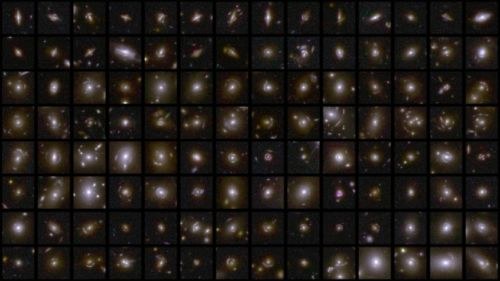
A new dataset from the ESA space telescope has been released. It includes the large-scale organisation of hundreds of thousands of galaxies along the cosmic web, along with the first classification of over 380,000 galaxies and 500 possible gravitational lenses
WET – Water-based Electric Thrusters, the new European project coordinated by the University of Bologna, will study the fundamental processes that regulate the formation and behaviour of plasma generated from water in order to attain the goal of designing an electric powertrain capable of propelling spacecraft
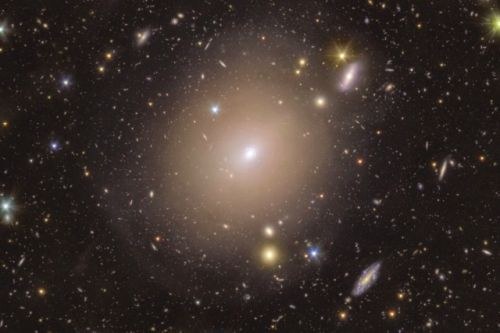
The ESA mission, in which the University of Bologna participates, has discovered that the galaxy NGC 6505 acts as a gravitational lens, diverting light from another far more distant galaxy: the result is a distorted image of the latter. This phenomenon, known as gravitational lensing, allows the study of invisible dark matter through its influence on the slightly deformed images of billions of galaxies
Detected by the KM3NeT deep-sea neutrino telescope, the event opens new scenarios in the interpretation of astrophysical phenomena occurring in the universe. A group of researchers from the ‘Augusto Righi’ Department of Physics and Astronomy of the University of Bologna and the local Section of the National Institute of Nuclear Physics participated in the discovery
The 208-gigapixel mosaic reveals 14 million galaxies and tens of millions of stars in the Milky Way, representing just 1% of the comprehensive cosmic map that will emerge from the observations of the European Space Agency’s (ESA) space telescope
NASA has approved funding for a preparatory study, in which Stefano Marchesi, a researcher at the Department of Physics and Astronomy "Augusto Righi," is involved. The new telescope could help us closely observe the birth of the first supermassive black holes at the centres of the earliest galaxies
A study involving the cities of Bologna, Rome, Copenhagen, Rotterdam, and Budapest provides new insights into urban microbial ecosystems and new tools to quickly identify potentially dangerous organisms
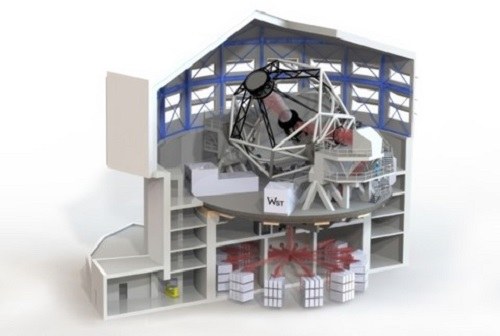
Financed by Horizon Europe, the telescope will feature unique capabilities and will focus entirely on spectroscopic observations. It is expected to become operational in Chile after 2040. The University of Bologna, with its Department of Physics and Astronomy, is a key member of the international consortium leading the project
Thanks to an international collaboration established at the University of Bologna, a theoretical framework has been devised for the first time to define the non-equilibrium characteristics of any chemical reaction network. This result opens way to developing new systems with life-like properties, among which energy storing, and next-generation nanotechnologies
A new international study reveals that a plasma bubble could be the origin of the persistent emission observed in some fast radio bursts. This new data allows to narrow down the nature of the ‘engine’ found behind these mysterious sources
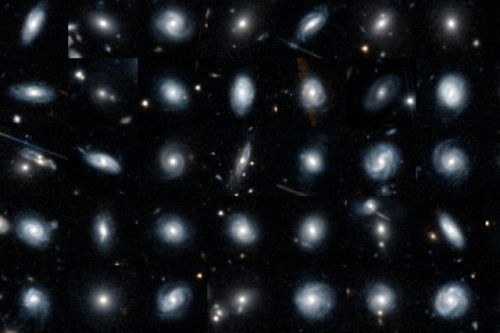
Tens of thousands of distant galaxies, waiting to be classified: this is the new citizen science project presented by ESA’s Euclid mission together with Galaxy Zoo on the Zooniverse platform. Voluntary contributions will train an artificial intelligence algorithm to identify the shape of the hundreds of millions of galaxies that the space telescope will observe over the next six years
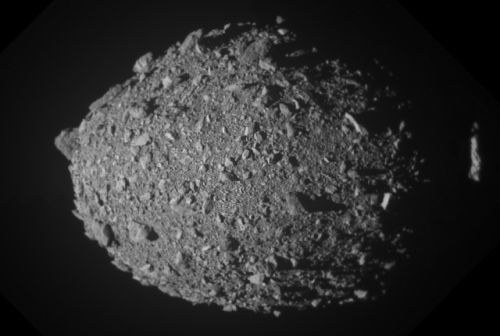
Following the success of the DART mission, which deflected the trajectory of a pair of asteroids, the results of the data collected before impact have now come in, offering a closer understanding of the formation process and behaviour of these space objects
Two Nobel laureates in Chemistry – Jean-Marie Lehn and Jean-Pierre Sauvage – will open the conference that gathers the brightest young researchers in this frontier research field, which promises revolutionary innovations in technology and medicine
The Horizon Europe ELSA project will use machine learning algorithms to analyse the gigantic archive of images and spectra produced by the European Space Agency (ESA) mission, searching for valuable details hidden among the faintest and rarest galaxies
Starting with organic materials that conduct electrons and ions (OMIEC), an international team of scientists has succeeded in creating bioelectronic microfilms that, when activated by tiny electrical impulses, can wrap themselves around nerves like little bracelets
The new European research project CheMatSustain, in which the University of Bologna is also participating, will focus on the quantum effects of nanomaterials, new models for predicting toxicity risks and new methodologies for assessing risk and social, environmental and economic impacts
An international team of researchers led by scientists from the University of Bologna and the National Institute of Astrophysics - INAF, has shown that in some cases black holes can rotate, redirecting their powerful beam of particles beam in different directions
Obtained from a single day of observations, the first snapshots are at least four times sharper than those obtained with terrestrial telescopes and cover large portions of the sky at an unparalleled depth