
How to Build Virtuous Relationships?
The stories of Camillo Olivetti, Edo Ansaloni and the workers of Officine Grandi Riparazioni are at the centre of a series of events organised by the University for its community at the Arena del Sole

Three theatre events explore how to build virtuous relationships inside and outside organisations, by engaging in dialogue with local communities. In a context such as the public administration, where different roles and visions coexist, the series “Storie di persone, Organizzazione, Territorio” (Stories of People, Organisation, Territory, an initiative devised by the Personnel Division of the University of Bologna, offers an invitation to reflect on how people can feel fulfilled at work while remaining in tune with their personal values.
With this new community education project, the University of Bologna is renewing its commitment to promoting a people-centred organisational culture, recognising that the quality of academic life, work and civic coexistence stems primarily from relationships built on respect, participation and the recognition of individual characteristics.
The educational and cultural initiative "Stories of People, Organisation, Territory", aimed at university staff (professional staff, foreign language instructors, lecturers and researchers, research fellows or contract researchers, PhD candidates and students) offers an opportunity for discussion and shared growth, reflecting the vision of an open, responsible and community-oriented university.
Through the experiences of Camillo Olivetti, Edo Ansaloni and the workers of Officine Grandi Riparazioni, the cycle of three meetings, to be held at the Arena del Sole on 16 December 2025, 12 February and 19 February 2026, encourages reflection on the centrality of the individual within organisations and the delicate balance between personal and collective interests.
Each meeting consists of a performance or documentary, followed by a final debate led by the protagonists, scholars and first-person narrators of the topic under discussion.
The first event, “Camillo Olivetti: alle radici di un sogno” (Camillo Olivetti: at the roots of a dream), is scheduled for Tuesday 16 December, from 3.30 p.m. to 7 p.m., with a final debate led by Laura Curino (actress and author), Beniamino De Liguori Carino (Secretary General of the Adriano Olivetti Foundation) and Giuseppe Varchetta (an organisational psychologist with a background in psychoanalytics). The debate will be moderate by the Deputy Rector Simona Tondelli. Based on an entrepreneurial model that has successfully combined productivity and social innovation with cultural vision and public awareness, the event will highlight how individual and collective responsibility, workplace aesthetics and a focus on people have contributed to creating a unique experience in Italian industrial history.
On Thursday 12 February, from 3.30 p.m. to 6 p.m., the event will focus on Edo Ansaloni, an enlightened entrepreneur and pioneer of European floriculture, collector, cameraman and photographer of the Liberation of Bologna, founder of the Museo Memoriale della Libertà dedicated to the marks left by the Second World War in the region of Emilia-Romagna.
The docufilm screened at this second event will trace the incredible life of this man of a thousand passions. Edo Ansaloni’s story spans most of the 20th century, from the mid-1920s through to 2020, when he passed away at the age of 95, leaving behind an extraordinary legacy.
The debate at the end of the evening will be moderated by Deputy Rector Simona Tondelli, and feature Danilo Caracciolo (director), Andrea Segrè and Marica Tolomelli (professors at the University of Bologna).
The third and final event is scheduled for Thursday 19 February, from 3.30 pm to 6 pm. It recounts the struggle of workers at the Officine Grandi Riparazioni of Bologna's State Railways against killer asbestos. The play will give voice to the four core elements of the story of Officine Grandi Riparazioni: reparations to trains, the factory, and human lives, and the righting of wrongs.
The closing debate, moderated by Deputy Rector Simona Tondelli, will include Donatella Allegro (author), Agata Mazzeo (researcher at the University of Bologna) and Federico Martelloni (professor and Delegate for Trade Union Relations at the University of Bologna).
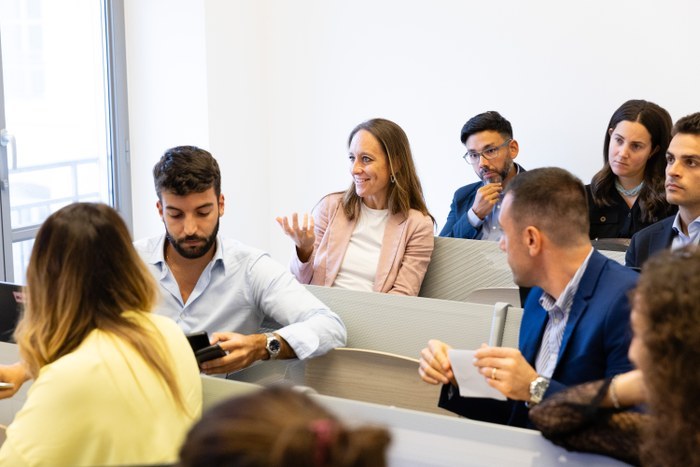
The University also offers a permanent community wellbeing programme that includes educational initiatives, meetings and other activities organised on a regular basis, not only for professional growth but also for safety, welfare and physical and mental health.
These initiatives include 'Sìcura', which runs during the annual Safety Week and offers food for thought on topics such as care of the working environment, processes and organisation, but above all on taking care of people to make sure that work is a place for freedom, dignity, autonomy, self-realisation and sharing in common progress. Other activities are organised periodically on the themes of equal opportunities and occupational, mental and psychophysical well-being.
The University is therefore not only a place of study and research but also a community that grows together, promoting living and working conditions based on respect, safety and well-being. This commitment is reflected in concrete, continuous and participatory initiatives, where the people-centred approach remains the guiding principle for present and future actions.