Japan Honours NipPop
The Japanese Ministry of Foreign Affairs awards a distinction to the Association founded at the University of Bologna for its contribution to promoting Japanese culture in Italy
726 Articles
The Japanese Ministry of Foreign Affairs awards a distinction to the Association founded at the University of Bologna for its contribution to promoting Japanese culture in Italy
Eighteen university teams will gather at the University of Bologna to compete in chess. From Japan to the United States, from Uzbekistan to Europe, teams of young chess players will travel long distances not only to challenge one another, but also to get to know each other. Three intense days of competition will give participants the chance to build unforgettable memories and forge friendships that will last well beyond the tournament itself
A team of scholars at the University of Bologna has developed an artificial intelligence system that can automatically recognise archaeological sites. Using satellite images from the CORONA espionage programme of the 1960s, it has revealed four ancient human settlements that had previously gone unnoticed by archaeologists
The progress of the AVA3 self-assessment process, new procedures for graduation sessions, improvements to student services, and the new supplementary welfare agreement for staff are some of the topics addressed in the University Governing Bodies’ meetings in July
Fast, affordable and portable testing devices—just as reliable as molecular swabs and accessible to everyone: ECLIPSE, a European research project coordinated by the University of Bologna, is paving the way for new approaches to global health emergency prevention. The first results were presented at the R2B Exhibition
The deepest observations ever made of a galaxy cluster using low-frequency radio techniques have shed new light on the life cycle of radio galaxies, from their formation to their fading
A national initiative involving eight universities and research centres has been launched to promote Italian excellence in quantum technologies. The goal is to build a cohesive ecosystem, capable of competing internationally and aligned with the new Italian Strategy for Quantum Science and Technologies
An international research team has developed a tool that takes its cue from a series of genomic alterations to identify danger signals and the risk of developing the tumour among those with early, asymptomatic forms of the disease
A new zooarchaeogenetic study published in the journal PNAS reveals that overfishing caused by an extremely high number of tuna traps operating for centuries in the Mediterranean has left a genetic and demographic imprint on the Atlantic bluefin tuna (Thunnus thynnus), one of the world’s most iconic and exploited marine species
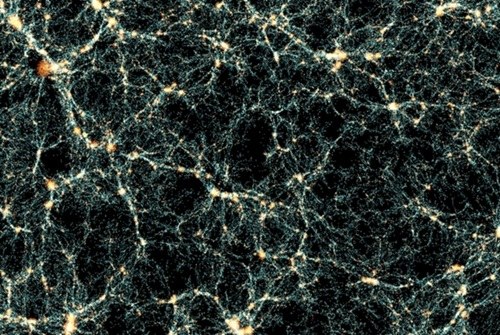
A “movie” of the evolving universe over ten years: the contribution of the Department of Physics and Astronomy “Augusto Righi” to the telescope that will revolutionise astronomical observation
A challenge for students at the University of Bologna to explore the impact of climate change on the population of Emilia-Romagna
The growing introduction of technologies based on artificial intelligence and automated decision-making systems in healthcare raises crucial questions for social research
The latest report on graduate profiles and employment outcomes highlights the University of Bologna’s ability to attract students from across Italy and around the world, thanks to its inclusive policies and high-quality education—qualities that are recognised and rewarded by the labour market. The data confirm that the University outperforms the national average in terms of on-time graduations, international mobility, and employment rates both one and five years after graduation
An international research team has developed a machine learning system capable of investigating the behavior of magnesium hydride under different conditions and temperatures — a significant step towards new, efficient, sustainable and safe solutions for hydrogen storage and transport
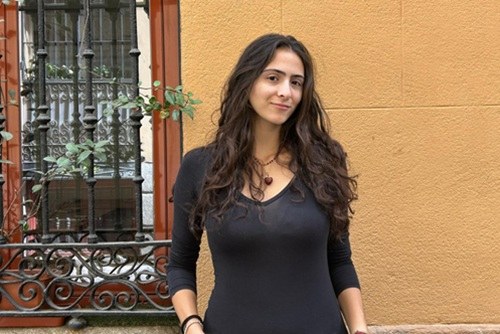
As part of the PhD Storytelling Lab initiative, Ylenia Bartolacelli—a PhD candidate at the Department of Medical and Surgical Sciences—presents a point-based system that uses echocardiographic parameters to predict the development of heart disease and identify only those newborns who truly need intensive care
By comparing the genome of 210 individuals from 14 Phoenician and Punic archaeological sites, it has emerged that the ancient inhabitants of Carthage had extremely heterogeneous origins, with most of their ancestry deriving from a genetic profile similar to that of modern-day Sicilian and Aegean populations, with significant contributions from North Africa