Unibo Magazine

681 Articles

A Perfect Ring for Euclid

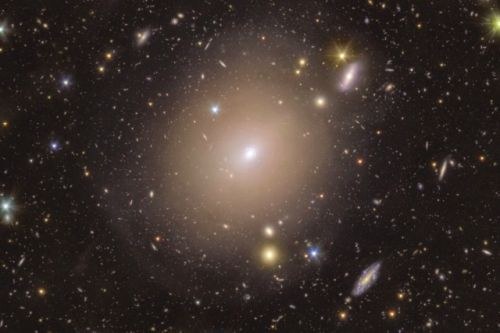
The ESA mission, in which the University of Bologna participates, has discovered that the galaxy NGC 6505 acts as a gravitational lens, diverting light from another far more distant galaxy: the result is a distorted image of the latter. This phenomenon, known as gravitational lensing, allows the study of invisible dark matter through its influence on the slightly deformed images of billions of galaxies


New Tools to Tackle Age-Based Discrimination

The Erasmus+ IMAGE project, in which the University of Bologna's Department of Management is participating, will develop a professional training course to provide human resource managers with useful tools to manage age differences in the workplace

Reading The Betrothed in Beijing

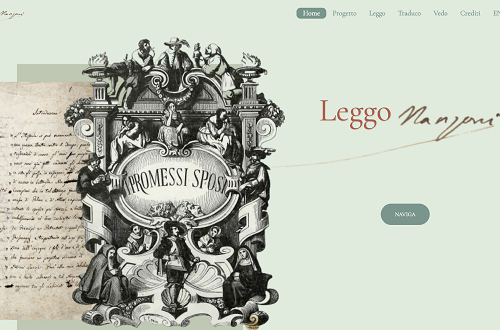
Students from the University of Bologna and Peking University will work together to create a digital edition of Manzoni’s novel with a parallel Chinese translation, turning this literary classic into a bridge between cultures across time and space

The Highest Energy Neutrino Ever Observed

Detected by the KM3NeT deep-sea neutrino telescope, the event opens new scenarios in the interpretation of astrophysical phenomena occurring in the universe. A group of researchers from the ‘Augusto Righi’ Department of Physics and Astronomy of the University of Bologna and the local Section of the National Institute of Nuclear Physics participated in the discovery

University Highlights: Key Resolutions – January 2025

This January, the University Governing Bodies discussed several key topics, including the appointment of the Evaluation Group for 2025-2028, the degree programme catalogue for 2025-2026, the Integrated Activity and Organization Plan (PIAO), the Gender Equality Plan (GEP) 2025-2027, paid study leave for technical-administrative staff, and the agreement with Modernissimo S.r.l.

How to Turn a Virus into an Anti-Cancer Nanobioparticle

A research team from the University of Bologna has developed a system that uses a specific bacteriophage — a virus that infects bacteria but is harmless to humans — as a template to synthesise new photosensitive nanoparticles able to target and destroy cancer cells and tissues