
Earthquake risk and mysterious particles: two new ERC Advanced Grants (led by women) for the University of Bologna
A tool to monitor and forecast the stress state of a fault in real time, and therefore assess and mitigate seismic risk, and a project aimed at uncovering hidden sectors of physics beyond the Standard Model: the University of Bologna has secured two new projects funded by the European Research Council (ERC), both led by female professors in STEM fields, for a total of over 4 million euros
Two new ERC Advanced Grants have been awarded to the University of Bologna, both led by female professors in STEM disciplines. These prestigious grants, totalling approximately 4.7 million euros, were awarded to Laura Gulia - currently a first researcher at the Federal Polytechnic of Zurich (ETH) and soon to join the University of Bologna - for the FARIA project (2.2 million euros), and to Silvia Pascoli for the DarkSHunt project (2.5 million euros), professor at the Department of Physics and Astronomy “Augusto Righi”.
Funded by the European Research Council (ERC), the EU body supporting talented scholars engaged in frontier research, ERC Advanced Grants are awarded to researchers who have achieved outstanding results in their field over the past decade. The aim is to provide them with the resources to pursue innovative research and open new frontiers in their disciplines.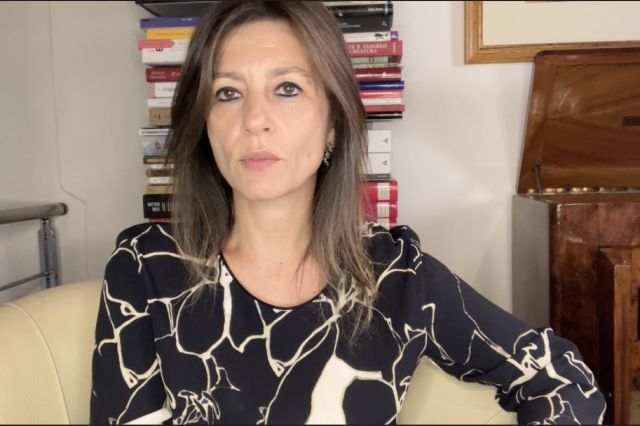
LAURA GULIA 'S "FARIA" PROJECT
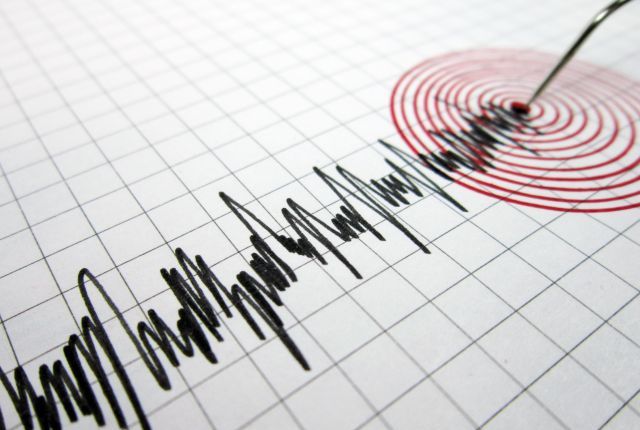
While earthquake prediction remains out of reach, real-time monitoring of seismic cycle changes - an essential step in assessing seismic hazards and mitigating the risks they pose - may soon be possible.
"Today we know that earthquakes interact with each other: high-magnitude events are followed by countless smaller ones, whose frequency decreases over time," explains Professor Laura Gulia, who leads the project. "We also know that these sequences are linked to variations in the magnitude-frequency distribution of earthquakes."
These variations can be measured by a value known as the b-value, which reflects the ratio of small to large earthquakes. If a major quake is followed by progressively weaker shocks, the b-value increases. However, a decreasing b-value may serve as a warning sign of a potentially significant upcoming event.
With the FARIA project - Forecasting and understanding the seIsmic cycle through b-value, Professor Gulia aims to use this metric to monitor the stress state of a fault in real time.
"Being able to monitor b-value trends in real time could allow us to detect when a rupture is imminent," says Gulia. "This would be a major breakthrough, with important implications for both our understanding of seismic processes and the assessment and mitigation of earthquake risk."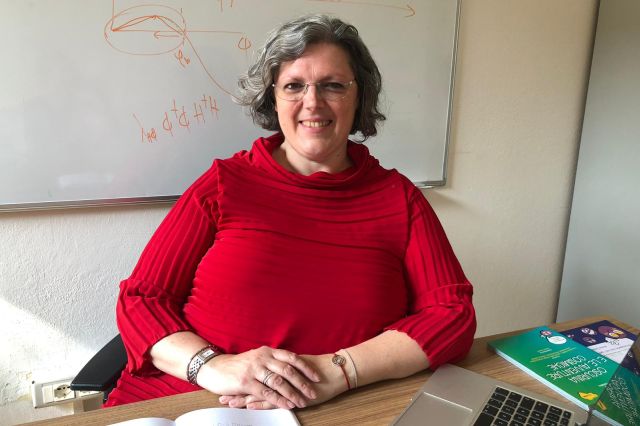
THE "DARKSHUNT" PROJECT BY SILVIA PASCOLI
The Standard Model is no longer enough. Despite its success in describing elementary particles and the forces that govern their interactions, it fails to account for phenomena such as neutrino mass, the nature of dark matter, and the matter–antimatter asymmetry (and thus our very existence).
New theories and perspectives are therefore needed. DarkSHunt - Hunting sub-GeV Dark Sectors - starts from this premise, seeking to uncover hidden sectors of physics beyond the Standard Model. These are new hypothetical particles and interactions that are extremely elusive, so much so that it has long been thought that it was almost impossible to test their existence, but that may no longer be the case.
"The next five years will offer us a unique window of opportunity," explains Professor Silvia Pascoli, who will lead the project. “New experiments will gather data, opening up the possibility to search for hidden sectors with unprecedented sensitivity and new strategies.”
The project aims to seize this opportunity by identifying clues (or even direct evidence) of the existence of dark sectors, working directly with collaboration with major international experiments to conduct dedicated analyses. The project will focus on the most promising strategies to search for heavy neutral leptons, hidden photons and "light" dark matter, i.e. particles with very low masses (sub-GeV).
"If DarkSHunt detects these signals - Pascoli emphasises - it would revolutionise our understanding of fundamental particles and their interactions, opening up entirely new avenues in the world of physics.”
In primo piano
-

L’Università di Bologna è la più sostenibile d’Italia, e tra le prime dieci al mondo
-

La Pantera siamo noi: il movimento studentesco del 1990 in mostra a Bologna
-

Due giorni di festa per le dottoresse e i dottori di ricerca dell’Università di Bologna
-

Due professori ricevono il premio Rimini Mundi 2025
-

Voci, saperi, patrimoni. Dall’Amazzonia al Museo, fra Modena e Bologna