

New Light on Gastrointestinal Mechanisms in Fabry Disease
The first symptoms of this rare inherited metabolic disease often appear in the gut: a joint study between the University of Bologna and APC Microbiome Ireland investigated how the accumulation of a particular metabolite, called lyso-Gb3, contributes to their development
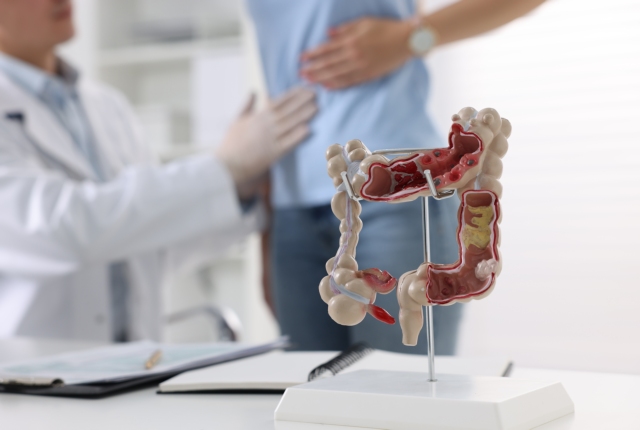
A group of scholars from the University of Bologna and APC Microbiome Ireland in Cork has shed light on a previously little-understood aspect of Fabry disease, a rare inherited metabolic disorder that manifests in childhood and affects several organs, starting with the gastrointestinal tract, where the first symptoms often emerge.
The study – published in the American Journal of Physiology - Gastrointestinal and Liver Physiology – investigated the impact at the intestinal level of a metabolite known as lyso-Gb3, which is present in high concentrations in the plasma of patients.
“This study has allowed us to better understand the gastrointestinal mechanisms of Fabry disease, which lead to symptoms that significantly affect patients’ quality of life”, explains Cecilia Delprete, PhD from the University of Bologna, now working at the IRCCS Institute of Neurological Sciences of Bologna and first author of the study. “The results confirm the importance of conducting functional studies on diseases like this in order to better define therapeutic targets”.
Fabry disease is caused by mutations in the GLA gene which cause a deficiency of an enzyme called alpha-GAL (alpha-galactosidase A). Under normal conditions, alpha-GAL eliminates a toxic substance known as Gb3 (globotriaosylceramide). Reducing the presence of alpha-GAL, the genetic mutation that causes Fabry disease leads to excessive accumulation of Gb3 and a more soluble derivative called lyso-Gb3 in various organs.
The researchers focused on this latter element, analysing the presence of lyso-Gb3 in the colon of animal models, to understand how its accumulation may contribute to the development of gastrointestinal symptoms associated with Fabry disease.
“Our analysis showed that lyso-Gb3 accumulation significantly alters ion transport within the intestine, affecting the amount of water present in the intestinal lumen and thereby contributing to common Fabry disease symptoms such as diarrhoea and intestinal pain,” explains Marco Caprini, professor at the Department of Pharmacy and Biotechnology of the University of Bologna, and one of the authors of the study. “In contrast, no significant changes were observed in intestinal motility, suggesting that Gb3 accumulation, rather than lyso-Gb3 alone, may be necessary to cause the more severe gastrointestinal disorders typical of this condition”.
The study was published in the American Journal of Physiology - Gastrointestinal and Liver Physiology with the title "Characterization of Fabry disease-associated lyso-Gb 3 on mouse colonic ion transport and motility". For the University of Bologna, the study involved Cecilia Delprete and Marco Caprini from the Department of Pharmacy and Biotechnology. The authors have also produced an audio feature of the study, available on the American Journal of Physiology - Gastrointestinal and Liver Physiology Podcast.
In primo piano
-

L’Università di Bologna è la più sostenibile d’Italia, e tra le prime dieci al mondo
-

La Pantera siamo noi: il movimento studentesco del 1990 in mostra a Bologna
-

Due giorni di festa per le dottoresse e i dottori di ricerca dell’Università di Bologna
-

Due professori ricevono il premio Rimini Mundi 2025
-

Voci, saperi, patrimoni. Dall’Amazzonia al Museo, fra Modena e Bologna