

The Genome of Indigenous People in the Andes Has Evolved to Adapt to Life at High Altitudes
A genomic study of individuals from the Aymara, Quechua and Uros ethnic groups has revealed genetic variants that allow the embryo to develop in low-oxygen conditions. Similar traits have been observed in Asian populations living in the Himalayas: a rare case of 'evolutionary convergence'
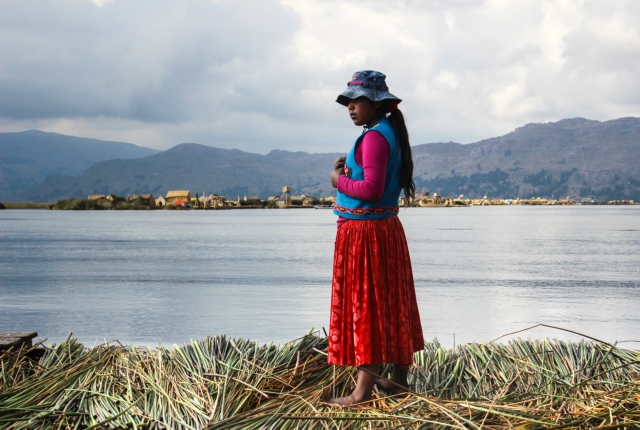
In the genome of South American populations living in the Andean highlands, particular combinations of genetic variants have been observed that allow the embryo to develop adequately in the earliest stages of intrauterine life, despite the lower concentration of oxygen in the blood due to the high altitude. This is the conclusion of a study published in the journal Communications Biology and led by researchers from the University of Bologna.
The research involved analysing the genomes of more than 150 individuals from the Aymara, Quechua and Uros ethnic groups living around Lake Titicaca, at an altitude of 3800 metres between Peru and Bolivia. The aim was to understand the genetic basis of the complex biological traits that have been shaped by natural selection in these populations in response to the stress caused by the organism's reduced ability to absorb oxygen from the atmosphere with increasing altitude.
"The populations living in the regions crossed by the Andean Cordillera have developed biological adaptations similar to those observed in the Himalayan populations, although not always with identical genetic bases," explains Marco Sazzini, professor at the Department of Biological, Geological and Environmental Sciences of the University of Bologna, who coordinated the study. "In order to study these aspects, we developed a series of analyses based on whole genome sequencing, capable of identifying genetic variants that, taken individually, would have a modest functional impact, but which, when combined, contribute to a significant modification of a specific biological trait".
The researchers also wanted to understand whether the biological adaptations of Andean populations to high altitude were exactly the same as those of Himalayan populations. This phenomenon is called 'convergent evolution': a similar adaptation that has evolved independently in different species or populations in response to the same environmental conditions, but not inherited from a common ancestor.
"In the human species, only a few cases of evolutionary convergence between populations living for tens of thousands of years in different geographical areas but in very similar ecological contexts have been described", says Prof. Sazzini. "One of the best known cases is the decrease in skin pigmentation in European and East Asian populations as a result of occupying regions with less ultraviolet radiation than the African continent.
From this point of view, biological adaptation to the high-altitude environment is a unique case, because the stress caused by the organism's limited capacity to absorb oxygen cannot be minimised by cultural adaptations and therefore affects all human groups living at comparable altitudes with the same intensity, regardless of their origin and the geographical and socio-cultural context in which they live.
Analysis of the genomes of individuals from the Aymara, Quechua and Uros ethnic groups has therefore shown that natural selection has favoured combinations of genetic variants associated with the formation of new blood vessels during the formation of the placenta and in the very early stages of embryonic development. This results in increased blood flow from the mother to the embryo, ensuring adequate oxygenation of the tissues even at high altitudes. These characteristics therefore reduce the risk of inadequate foetal development, the main cause of neonatal mortality in populations that are not adapted to hypoxia but have recently migrated to high altitudes.
"Some of these genes have also undergone natural selection in Tibetan and Sherpa populations in the Himalayas, but often together with additional genes and with different combinations of genetic variants than those observed in the Andean populations,” adds Giulia Ferraretti, first author of the study. "The complex picture that emerges is therefore that of an evolutionary convergence observed at the level of biological functions, the modifications of which have allowed these human groups to survive and reproduce at high altitudes for thousands of years, but which is only partially due to a convergence also at the level of the genetic bases that regulate these adaptations".
The research, funded by the Fondazione Cassa di Risparmio in Bologna was published in the journal Communications Biology under the title 'Convergent evolution of complex adaptive traits modulates angiogenesis in high-altitude Andean and Himalayan human populations'. The research was coordinated by Marco Sazzini, professor at the Department of Biological, Geological and Environmental Sciences (BiGeA) of the University of Bologna and member of the Alma Climate Interdepartmental Centre. Giulia Ferraretti, a PhD student in Earth, Life and Environmental Sciences, signed the paper as first author, together with Aina Rill, a PhD student at the University of Barcelona and Paolo Abondio, postdoctoral student at the Tor Vergata University of Rome.
For the University of Bologna , Stefania Sarno, Marta Alberti and Davide Pettener from the Department of Biological, Geological and Environmental Sciences (BiGeA), Donata Luiselli from the Department of Cultural Heritage, Massimo Izzi and Paolo Garagnani from the Department of Medical and Surgical Sciences also took part in the research. Sara De Fanti from the Institute of Neurological Sciences in Bologna, Claudia Ojeda-Granados from the University of Catania, Agense Dezi and Angela Corcelli from the University of Bari Aldo Moro, Guido Alberto Gnecchi Ruscone from the University of Tübingen (Germany), Luca Natali of the Italian Institute of Human Palaeontology, Phurba Tenjing Sherpa of the Mount Everest Summiters Club (Nepal) and Paolo Cocco, Massimiliano Tiriticco, Marco Di Marcello, Giorgio Marinelli and Davide Peluzzi, members of the Explora Nunaat International association also took part in the project.
In primo piano
-

L’Università di Bologna è la più sostenibile d’Italia, e tra le prime dieci al mondo
-

La Pantera siamo noi: il movimento studentesco del 1990 in mostra a Bologna
-

Due professori ricevono il premio Rimini Mundi 2025
-

Voci, saperi, patrimoni. Dall’Amazzonia al Museo, fra Modena e Bologna
-

In primo piano: le delibere di Ateneo – novembre 2025