
Towards a New Balance in the Energy System, Between Resilience and Innovation
From renewables to carbon capture and storage: where do we stand with the energy transition in a world cyclically marked by geopolitical crises? UniboMagazine discussed it with Professor Ezio Mesini

In a changing world, the transition is not like a switch you can simply turn on, and the shift from one model to another takes time and targeted technologies. “The Energy Transition must be complementary and not a replacement. We must take into account current demand, still met by fossil fuels for 80% — including transport and emerging sectors such as artificial intelligence, which consumes vast amounts of energy. An urgent challenge at the global level, and in particular for Italy and Europe, is to keep the energy transition, social cohesion and industrial development together”
Recent history reminds us that energy crises are not exceptional events, but phenomena that periodically return to reshape balances and strategies. The Suez Crisis in 1956, the Six-Day War in 1967, the Yom Kippur War in 1973, the Iranian Revolution in 1978–79, the Gulf Crisis in 1990–91, Russia's invasion of Ukraine in 2022, and the ongoing turmoil across the Middle East: at least seven geopolitical upheavals in the past seventy years have shaken the foundations of global energy supply.
It is a cyclical pattern that raises a question: what role can renewable energy and new decarbonisation technologies have in these recurring turns of history? What is their level of development and use?
We tried to answer these questions with the help of Ezio Mesini, professor at the Department of Civil, Chemical, Environmental, and Materials Engineering at the University of Bologna and chair of the Carbon Capture Storage Committee (CCS Committee) of the Italian Ministry of the Environment and Energy Security.
In a changing world, the transition is not like a switch you can simply turn on, and the shift from one model to another takes time and targeted technologies. “The Energy Transition must be complementary and not a replacement. We must take into account current demand, still met by fossil fuels for 80% — including transport and emerging sectors such as artificial intelligence, which consumes vast amounts of energy. An urgent challenge at the global level, and in particular for Italy and Europe, is to keep the energy transition, social cohesion and industrial development together,” Professor Mesini says.
Taking a global view, recent years have seen record growth in renewable energy, driven above all by solar and wind power. China is leading this expansion, followed by the United States, Europe, India and Brazil. At the same time, gas, oil and coal still remain pillars of the global energy system.
What about Italy? In the country’s overall energy mix, oil and gas still dominate, while renewables now account for roughly 50% of domestic electricity generation. In just one year, for example from 2023 to 2024, hydroelectricity grew by 30%, solar by 17% and bioenergy by 7.4%. Emissions continue to fall, from 518 million tonnes of CO₂ equivalent in 1990 to 331 million in 2023. This is a significant improvement, even if it is still far from the European target set for Italy for 2030 (233 million tonnes).
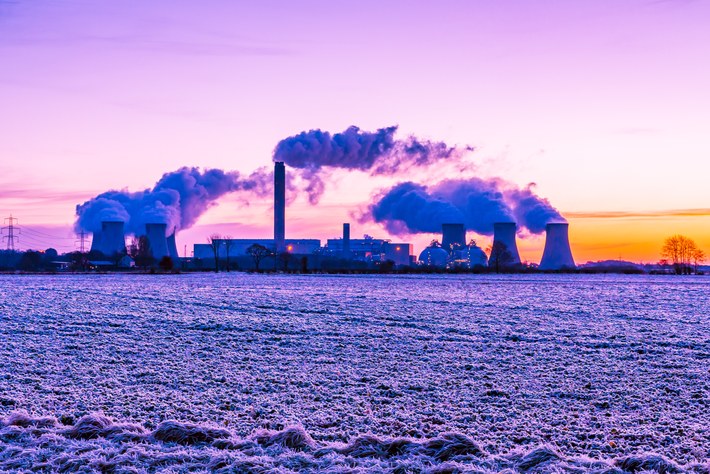
Shifting the focus to the industrial landscape, the real challenge lies in the so-called “hard to abate” sectors — highly energy-intensive industries such as steel, cement, paper and the chemical industry, for which no viable alternatives currently exist to reduce emissions both effectively and at an economically sustainable cost. This is where Carbon Capture and Storage takes on a central role. CCS technology makes it possible to capture carbon dioxide directly from industrial flue stacks, to be reused in other production cycles or stored permanently deep underground, thereby preventing it from being released into the atmosphere.
Italy is now one of the most active countries in Europe in this field thanks to the Ravenna CCS project, launched in 2023. It has one of the largest storage hubs on the continent and uses depleted gas fields beneath the Adriatic Sea. The initial phase has already shown that it is possible to capture over 90% of the CO₂ emitted by a plant, even when it is present at very low concentrations. The aim is to reach four million tonnes per year by 2030, up to an overall potential of over 500 million tonnes.
“CCS technology not only helps reduce emissions — it also strengthens the resilience of the industrial system by allowing hard-to-abate sectors to keep operating while limiting their climate impact. It encourages the intelligent reuse of existing infrastructure and reservoirs, applying the principles of the circular economy to the energy sector, and sets a template for carbon capture and storage models that can be replicated in other countries by building hubs capable of receiving CO₂ from multiple sources,” says Mesini.
At a global level, in the long term, the most optimistic scenarios foresee 80–90% of electricity generation from renewables, with a variable contribution from nuclear power (6–15%) and a targeted role for Carbon Capture and Storage (CCS) for unavoidable emissions, thus achieving a reduction of over 90% of global CO₂ emissions.
The transition, in other words, does not offer a simple solution to the complexity of the energy system — it redistributes it, making the system less vulnerable to geopolitical pressures and better oriented towards sustainable equilibrium. We are not witnessing the end of fossil energy, but the emergence of a new balance — one defined by resilience, climate awareness and openness to innovation.
-
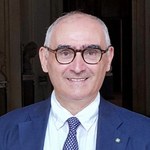
Ezio Mesini
Ezio Mesini is a professor in the Hydrocarbons and Underground Fluids unit at the Department of Civil, Chemical, Environmental, and Materials Engineering (DICAM) of the University of Bologna. Since 2017, he has been chair of the Interministerial Committee for the Safety of Offshore Operations in the hydrocarbons sector. Since 2025, he has been chair of the National Committee for the Development of CO2 Capture and Geological Storage. Alongside his academic activity, he holds several institutional roles and provides consultancy in the energy and mining sectors.