Unibo Magazine

230 Articles

Europe’s (and possibly the world’s) oldest boomerang

Over 70 centimetres long, finely carved from a mammoth tusk, and discovered in the Obłazowa Cave in Poland, it dates back more than 42,000 years: a new study led by the University of Bologna reveals a surprising level of cognitive skill, technical design, and symbolic thinking already present during the early phases of Homo sapiens’ presence in Europe

Earthquake risk and mysterious particles: two new ERC Advanced Grants (led by women) for the University of Bologna

A tool to monitor and forecast the stress state of a fault in real time, and therefore assess and mitigate seismic risk, and a project aimed at uncovering hidden sectors of physics beyond the Standard Model: the University of Bologna has secured two new projects funded by the European Research Council (ERC), both led by female professors in STEM fields, for a total of over 4 million euros

How do cities grow? A mathematical model to predict urban development

Based on an analysis of night lights in a large area around Beijing between 1992 and 2013, researchers from the University of Bologna and the Ca' Foscari University of Venice have developed a model capable of reproducing the distribution of urbanised areas with significant accuracy. The tool could be used to support sustainable urban planning and hydrogeological risk management

How Do Magnetic Fields “Grow”?

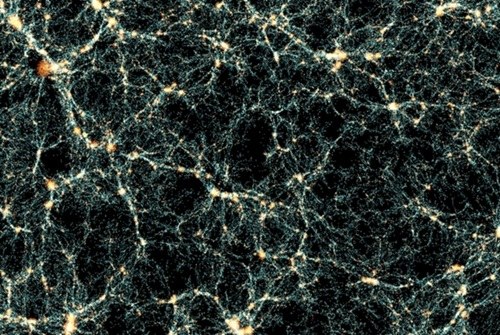
Led by Annalisa Bonafede, professor at the “Augusto Righi” Department of Physics and Astronomy of the University of Bologna, the ERC BELOVED project seeks to uncover the mechanisms behind the amplification of magnetic fields within galaxy clusters

IRIS Comes Aboard the International Space Station to Protect Astronauts from Radiation

Financed by the Italian Space Agency and carried out by the Italian National Institute of Nuclear Physics (INFN) - TTLab (Technological Transfer Lab) in collaboration with the University of Bologna, the sensors can detect and transmit in real time the dose of ionising radiation received by the wearer to the Operations Centre, on the ground or at the Space Base, allowing the activation of an immediate alarm in case of overexposure