
Green energy and inclusion: the challenge of Renewable Energy Communities
Engaging citizens, public bodies, businesses and universities in local initiatives: the national picture and the Bologna experience

Engaging citizens, public bodies, businesses and universities in local initiatives: the national picture and the Bologna experience

UniboMagazine spoke to Fabio Sgolastra, Professor at the Department of Agricultural and Food Sciences and one of the authors of a commentary on the issue published in Science

Funded with €1.2 million, the European MagBIO project will develop “magnetobots”, engineered microorganisms capable of moving within the human body, supporting diagnostic monitoring and delivering anticancer drugs. The University of Bologna is among the 18 partners in the international consortium

A series of analyses conducted on the genome of Yakutia’s inhabitants, where low temperatures can reach -70°C, has highlighted certain combinations of genetic variants that can positively regulate physiological functions associated with exposure to cold. And the hybridisation of their ancestors with Neanderthal populations also plays a part
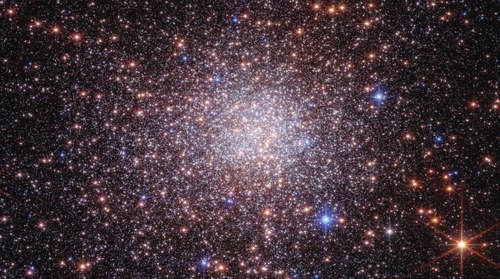
A new analysis based on observations from the James Webb Space Telescope suggests that Terzan 5, long considered a globular cluster, may instead be a kind of living archaeological relic of the birth of our galaxy

With more than 60 million stars, the image could help confirm the existence of exoplanets and measure their masses through variations in starlight

A study identifies the brain mechanism that links expectations to confidence in our decisions in the alpha oscillations of the right parietal cortex

The analysis of a fossil humerus preserved in the Geology Collection “Museo Giovanni Capellini” of the University of Bologna documents one of the oldest known cases of healing from a severe fracture in cave lions. The study, led by the University of Padua, provides rare insights into the lives and survival strategies of the great predators of the Pleistocene

A team of students from the University of Bologna has been selected to trial a multi-robot orbital system for space debris removal at the Orbital Robotics Laboratory of the European Space Agency

A new study suggests that the presence of extraoral soft tissues — labial scales or "lips" for short — was not unique to extant lepidosaur reptiles (lizards, snakes, and tuataras), but rather represents the primitive condition for all reptiles, including archosauromorphs that lived during the Triassic period more than 240 million years ago

The University of Bologna contributed to the study, which traces the evolution of filamentary structures of galaxies back through time, up to when the universe was just one billion years old