Unibo Magazine

231 Articles

Are Environmental Subsidies the Right Tool for the Green Transition?

Governments are introducing them to promote clean energy production and encourage the spread of electric vehicles, but paradoxically, they might end up generating negative environmental effects. UniboMagazine discussed this topic with Alessandro Tavoni, professor at the Department of Economics at the University of Bologna, and one of the authors of a piece on the subject published in the journal Science

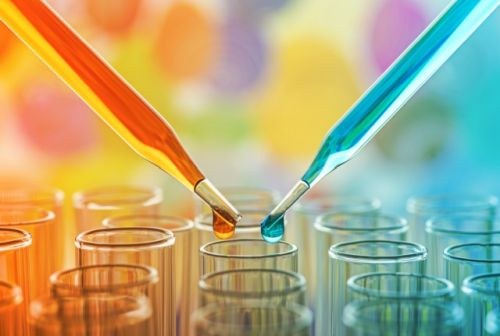
How to quantify the non-equilibrium of chemical mechanisms found at the origin of life

Thanks to an international collaboration established at the University of Bologna, a theoretical framework has been devised for the first time to define the non-equilibrium characteristics of any chemical reaction network. This result opens way to developing new systems with life-like properties, among which energy storing, and next-generation nanotechnologies

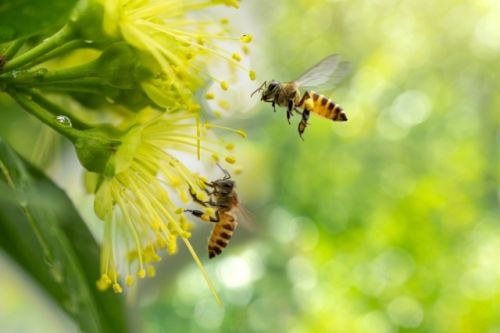
Which bees inhabit Emilia-Romagna?

Alongside the Apis mellifera ligustica, a native subspecies fundamental for beekeeping, some traces of Carniolan honeybee, Africanized bee and European black bee have been identified too. This was revealed by the first study on genetic diversity of honeybee populations in the Emilia-Romagna region. Results can help us preserve the Apis mellifera ligustica subspecies from genetic erosion

Nine Resources for Teachers and Educators to Promote Inclusion in Schools

These freely accessible online resources were developed thanks to NEW ABC, a Horizon 2020 project coordinated by the University of Bologna. The researchers collaborated with schools, associations, local institutions and ONGs to build and test innovative practices and methodologies in formal, informal and non-formal learning environments

An artificial enzyme uses light to produce complex chemical reactions

It has been devised by a research group inspired by natural molecules that use light energy to trigger chemical transformations. The result opens new possibilities for the sustainable synthesis of complex compounds, with potential applications in pharmaceutical chemistry and advanced materials production

A new Picene princely tomb from Corinaldo

As part of the ArcheoNevola project – led by the University of Bologna – a large burial dating back to the 7th century B.C. has been discovered. It contains over 150 objects, including a two-wheeled chariot and a prestigious set of bronze artifacts comprising a helmet, a cauldron, and several finely decorated containers

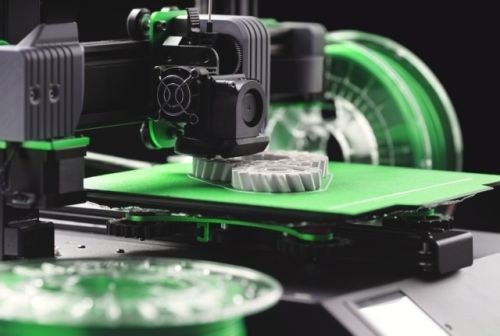
An e-learning platform to explore additive manufacturing

The Erasmus+ project ADDress for Future—which also involves the University of Bologna—has launched an online platform offering high-quality training through a series of modules at various levels of depth. There’s even an ideas contest rewarding the most innovative projects that promote greener production through advanced and sustainable solutions

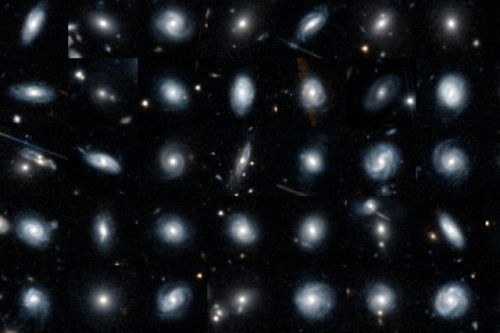
What shape is that galaxy? Euclid is looking for volunteers to study the Universe

Tens of thousands of distant galaxies, waiting to be classified: this is the new citizen science project presented by ESA’s Euclid mission together with Galaxy Zoo on the Zooniverse platform. Voluntary contributions will train an artificial intelligence algorithm to identify the shape of the hundreds of millions of galaxies that the space telescope will observe over the next six years

Launching “Great-ER", free programme for deep tech startups and spin-offs

‘Growing and Empowering Advanced Technologies in Emilia-Romagna’ is the title of the new call launched thanks to European Funds of the Emilia-Romagna Region (FESR 2021-2027) for the development of solutions with high scientific and technological content in the following fields: Clean, Safe and Accessible Energy, Circular Economy, Innovation in Materials, Digitalisation, Artificial Intelligence, Big Data, Manufacturing 4.0 and Future Evolutions, Cities and Communities of the Future. The 12 selected projects will receive free services valued at €20,000 each

New Technology to Improve Brain Activity Mapping

Developed by researchers from the University of Bologna and Dartmouth College, this consists of an innovative template of the cortical surface, developed based on the anatomy of 1031 human brains, which makes it possible to conduct studies in functional magnetic resonance imaging with less data and a higher level of replicability and reproducibility