Unibo Magazine

231 Articles

Using Water as a New Space Fuel

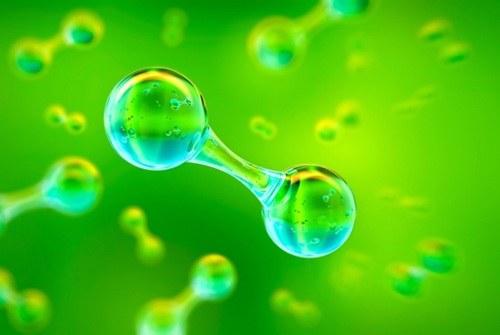
WET – Water-based Electric Thrusters, the new European project coordinated by the University of Bologna, will study the fundamental processes that regulate the formation and behaviour of plasma generated from water in order to attain the goal of designing an electric powertrain capable of propelling spacecraft

A Perfect Ring for Euclid

The ESA mission, in which the University of Bologna participates, has discovered that the galaxy NGC 6505 acts as a gravitational lens, diverting light from another far more distant galaxy: the result is a distorted image of the latter. This phenomenon, known as gravitational lensing, allows the study of invisible dark matter through its influence on the slightly deformed images of billions of galaxies

The Highest Energy Neutrino Ever Observed

Detected by the KM3NeT deep-sea neutrino telescope, the event opens new scenarios in the interpretation of astrophysical phenomena occurring in the universe. A group of researchers from the ‘Augusto Righi’ Department of Physics and Astronomy of the University of Bologna and the local Section of the National Institute of Nuclear Physics participated in the discovery

AXIS: The Most Powerful X-Ray Space Telescope

NASA has approved funding for a preparatory study, in which Stefano Marchesi, a researcher at the Department of Physics and Astronomy "Augusto Righi," is involved. The new telescope could help us closely observe the birth of the first supermassive black holes at the centres of the earliest galaxies

Against Conflicts, for Sustainability: The Ecological Peace Corridors

In a world increasingly marked by human impacts and wars, a novel conservation strategy is emerging that fosters cooperation among neighbouring countries while enhancing ecosystem and wildlife connectivity. UniboMagazine discussed this initiative with Roberto Cazzolla Gatti, a professor in the Department of Biological, Geological, and Environmental Sciences at the University of Bologna, who introduced the proposal in the journal Biological Conservation